
Wilmington has no shortage of ghost stories, but not every dramatic tale has the same historical support. This guide focuses on 10 places that are useful to visitors interested in both the city’s real past and the folklore that grew around it.
This is not a scientific ranking of paranormal activity. For each location, we separate what can be documented from what belongs to local legend, ghost-tour storytelling, or reported experience. That distinction matters in a city where genuine history is often more interesting than the exaggerated version.
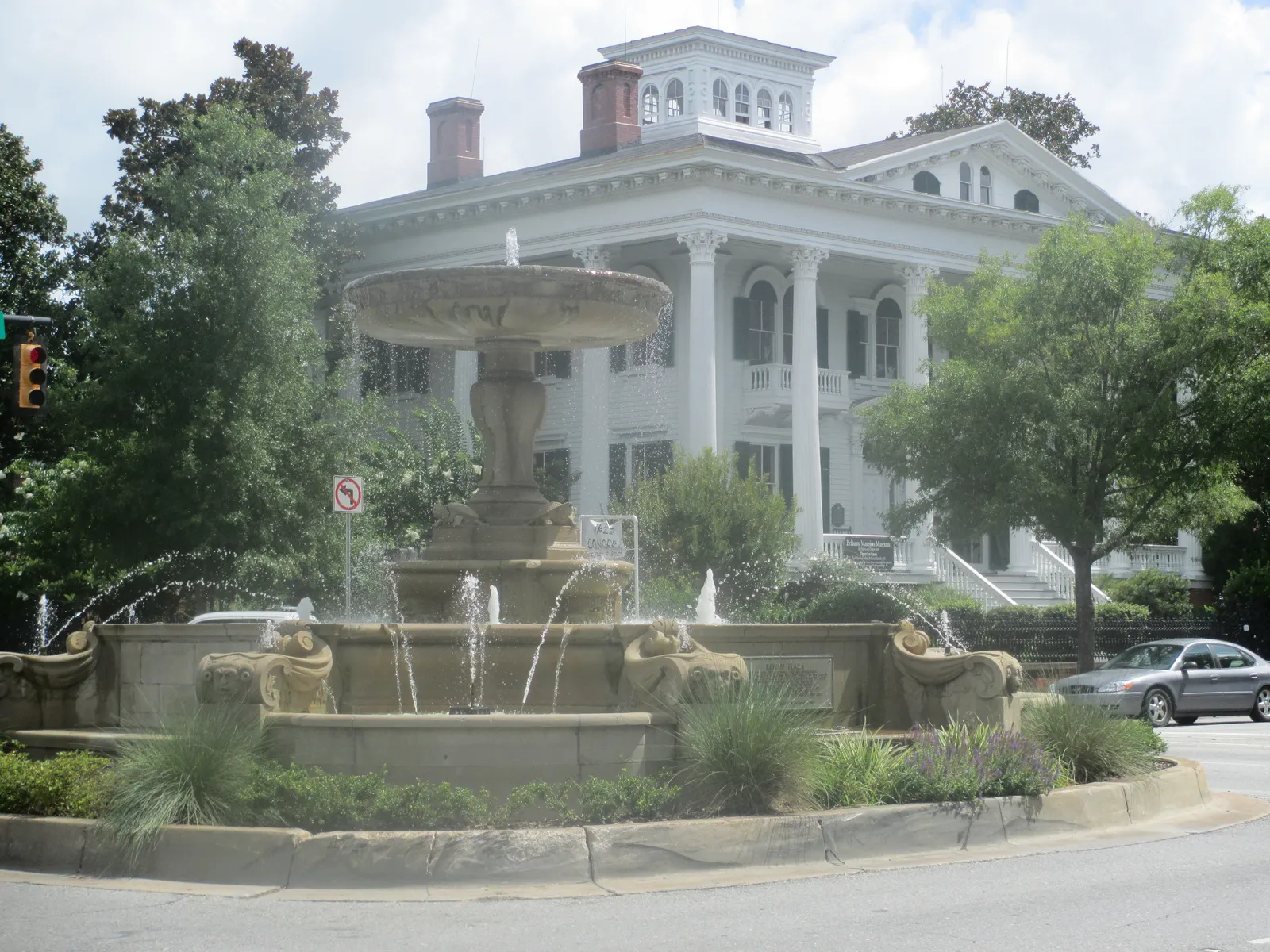
1. Bellamy Mansion
The Bellamy Mansion is one of Wilmington’s best-known historic homes and one of the easiest places on this list to research properly. Construction began in 1859 and the Bellamy family moved into the new house in early 1861. Dr. John D. Bellamy and his wife Eliza ultimately had 10 children, and the household also depended on enslaved workers whose lives are interpreted by the museum today.
The documented story includes the Civil War, the family’s displacement, Union occupation, and the long preservation history of the property. Ghost stories about footsteps, figures, and unusual sensations are part of later visitor lore, not established historical fact. The Bellamy Mansion Museum’s own history of the people who lived and worked here is the best starting point before reading the haunted versions.
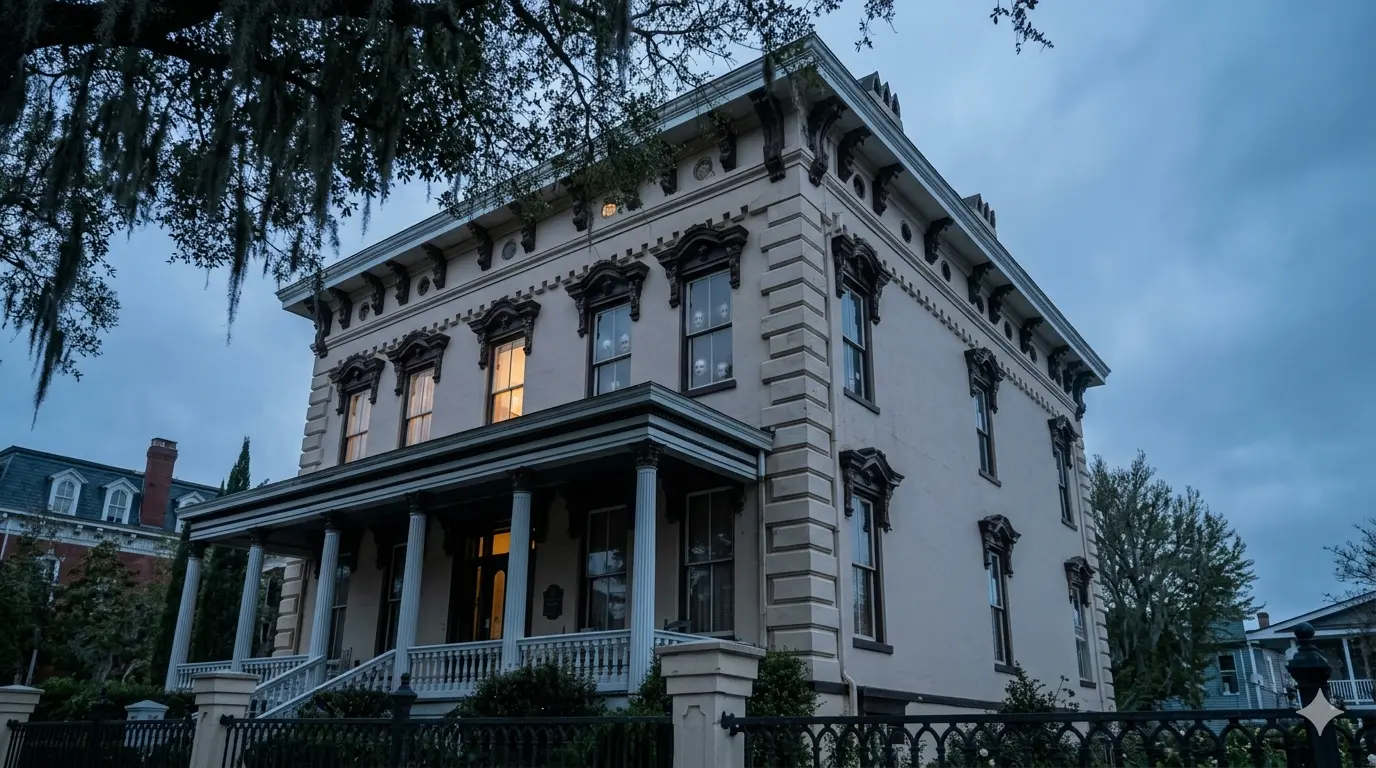
2. Latimer House
Built in 1852, the Latimer House offers a detailed look at a wealthy Wilmington household before and after the Civil War. Zebulon and Elizabeth Latimer had nine children, but only four sons survived to adulthood. That family history is sometimes simplified online into claims that multiple children died inside the house; the museum does not establish that version.
Ghost-tour stories add footsteps, faces in windows, and the sound of children. Those accounts are better treated as folklore layered onto a well-documented family history. The Latimer House Museum’s official history provides the reliable background, including the family, collections, and surviving property.
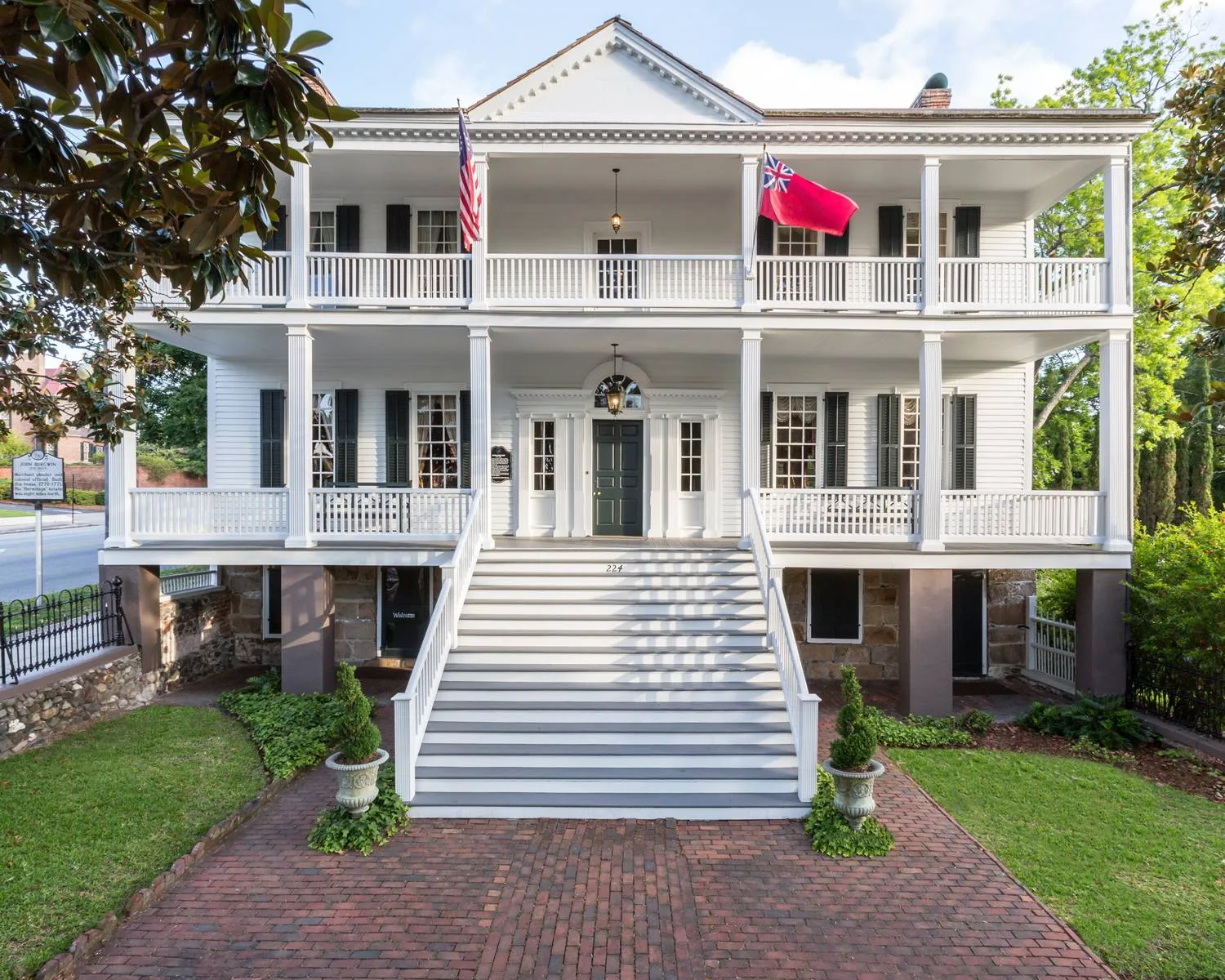
3. Burgwin-Wright House
The Burgwin-Wright House has one of the strongest historical foundations of any “haunted” location downtown. Wilmington’s first city jail operated on the property from 1744 to 1768. John Burgwin then built his townhouse in 1770 using surviving ballast-stone jail walls as part of the foundation.
That is a real and unusual connection to colonial Wilmington. Stories about phantom tobacco smells, footsteps, or a woman near a spinning wheel belong to later haunted lore. The Burgwin-Wright House’s official history documents the jail, the house, and the families associated with the property without needing to turn legend into fact.
4. Poplar Grove Historic House & Museum
Poplar Grove, north of central Wilmington, is different from most entries because the museum itself openly hosts paranormal programs. The current manor house dates to around 1850 and was constructed and maintained through the labor and skills of enslaved people connected to the Foy household and neighboring plantations.
That history deserves to remain central. Poplar Grove’s own paranormal-tour page invites guests to investigate reported activity but explicitly says there is no guarantee of ghost activity. That makes it a useful example of how a historic site can present paranormal programming while still distinguishing it from documented history. See the museum’s current paranormal-tour information for its own wording and policies.
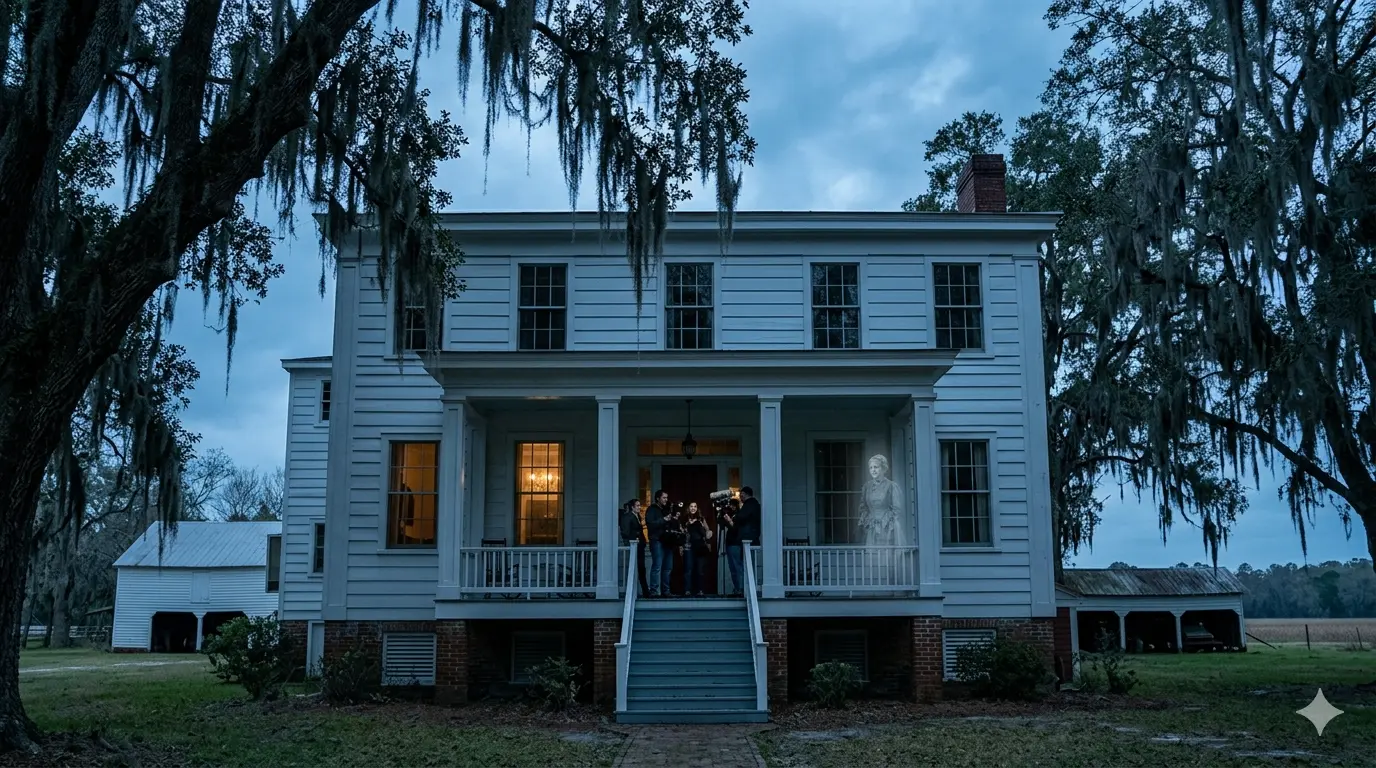
5. The Cotton Exchange
The Cotton Exchange is a collection of eight historic commercial buildings rather than a single old mansion. Its strongest story is one of preservation: the complex was saved from demolition in the 1970s and reopened in 1976 for shops, dining, and offices.
Local ghost stories mention unexplained sounds, moved objects, and occasional figures, but the documented history is easier to verify. The Cotton Exchange describes itself more precisely as the first downtown complex in North Carolina to adapt and use existing historic buildings—a narrower and more defensible claim than calling it the first adaptive-reuse project in the entire state.
6. Thalian Hall
Opened in 1858, Thalian Hall remains an active performing-arts venue inside Wilmington’s historic City Hall complex. It is the only surviving theater designed by 19th-century architect John Montague Trimble and has hosted generations of local and touring performers.
Stories of balcony figures, footsteps, and backstage presences are part of Wilmington’s haunted tradition. Claims that the theater was built over a forgotten graveyard, however, are not established in the venue’s published history. The official Thalian Hall history is especially useful here because it gives a detailed chronology without repeating the more sensational claims.
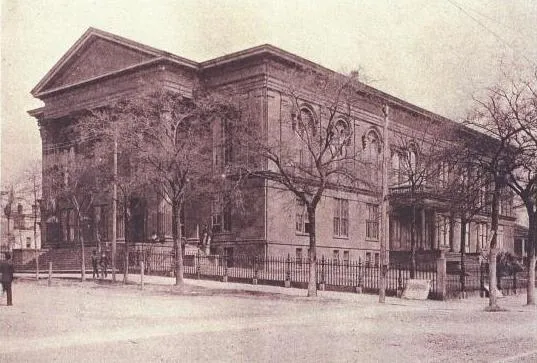
7. Battleship NORTH CAROLINA
The Battleship NORTH CAROLINA has a very different history from Wilmington’s old houses. Commissioned in 1941, the “Showboat” served in every major U.S. naval offensive in the Pacific during World War II and earned 15 battle stars. It arrived in Wilmington in 1961 and now serves as North Carolina’s World War II memorial.
Paranormal stories about footsteps, voices, and sailors have accumulated around the ship over time. Unlike many sites, the Battleship acknowledges the interest directly: its official FAQ says it is a popular destination for paranormal investigation groups. That acknowledgement does not verify any specific ghost story, but it does establish that paranormal interest is a real part of the site’s modern visitor history. See the official ship history for the documented record.

8. St. James Episcopal Graveyard
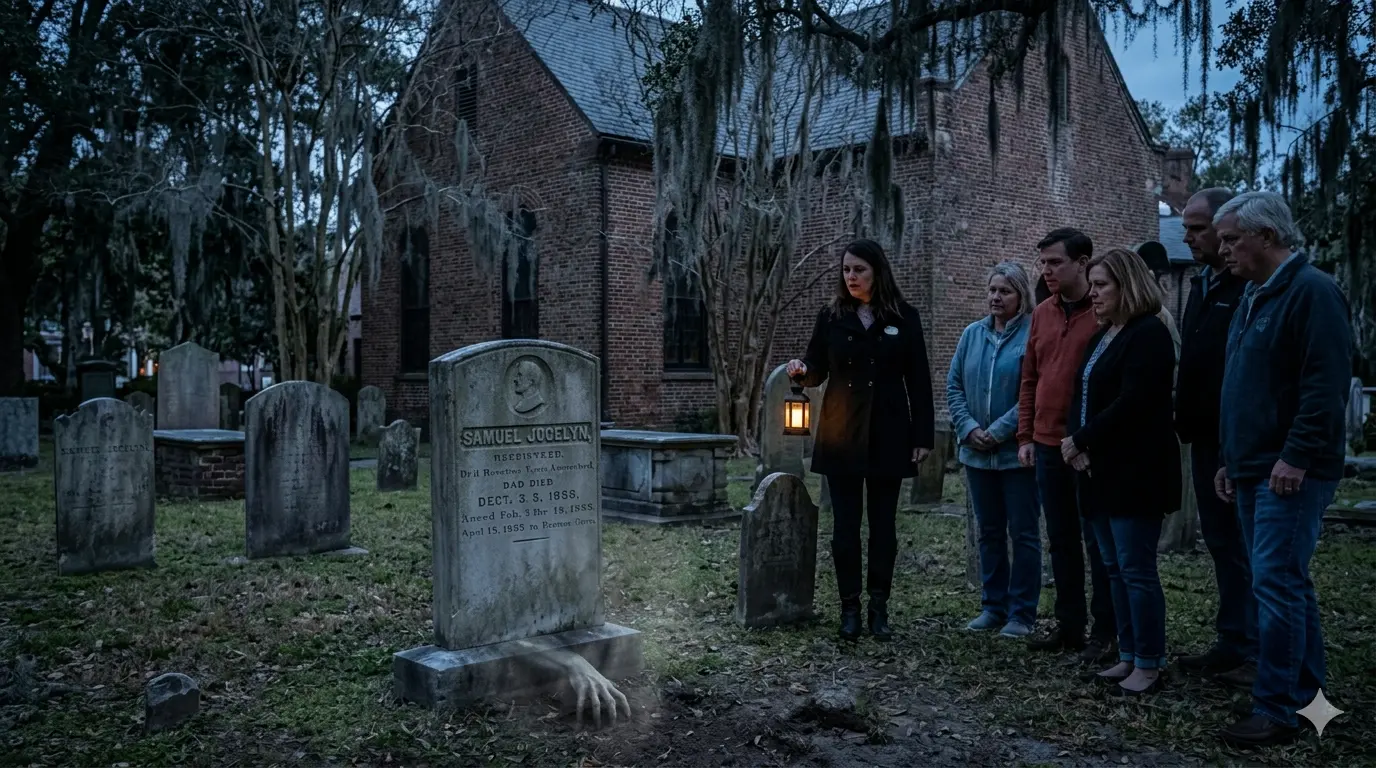
The St. James Graveyard predates the present church building. St. James Parish was established in 1729, and the oldest surviving gravestone is for William Hunt, a 19-year-old sailor who died in 1757.
The graveyard’s best-known supernatural story concerns Samuel Jocelyn. An early published version describes Jocelyn’s death in an accident and then tells, as a local tradition, of a later appearance and the opening of his grave. The dramatic “buried alive” details repeated today should therefore be treated as folklore rather than documented medical history. The official St. James history is the best source for the church and graveyard chronology.
9. The Former Bulluck Hospital
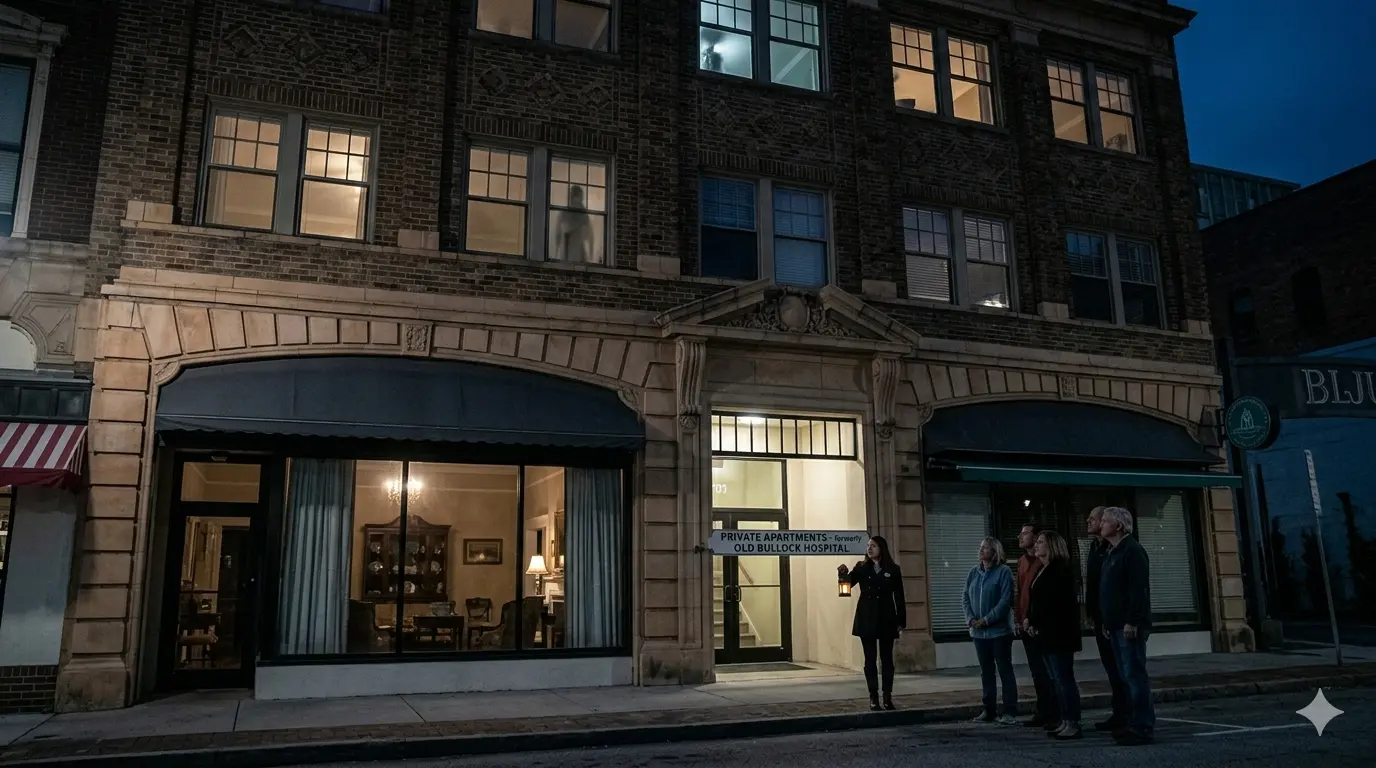
The former Bulluck Hospital is one of the clearest examples of a ghost story growing around a real institution whose history became blurred online. Wilmington city directories list Bulluck Hospital on North Front Street in the 1920s and 1930s, and later records show the Bulluck Hospital Clinic still operating after founder Dr. Ernest S. Bulluck died in 1944.
The building associated with the later clinic at 221 N. Front Street is not an abandoned haunted hospital or a private residence; it remains in active use. Stories about children’s voices, elevator activity, footsteps, and shadow figures are anecdotal. For a primary historical reference, the 1924 Wilmington city directory preserved by DigitalNC lists Bulluck Hospital and its physicians.
10. Gallows Hill and the Price-Gause House
Gallows Hill is a better final entry than some of Wilmington’s more colorful waterfront legends because its story has a stronger historical trail. Local historians have identified more than one execution site used during Wilmington’s history, and research surrounding the Price-Gause House connects this part of Market Street with one of the places remembered as Gallows Hill.
The later ghost stories—footsteps, tobacco smells, doors moving, and other activity inside the house—remain folklore. A useful overview is the Cape Fear Unearthed investigation of Gallows Hill, which draws on local historians, historic-property research, and period newspaper material while explaining why Wilmington’s gallows history is more complicated than a single spooky address.
Which Haunted Places Can You Actually Visit?
These locations do not all work the same way for visitors. Bellamy Mansion, Latimer House, Burgwin-Wright House, Poplar Grove, Thalian Hall, and the Battleship operate as museums, cultural venues, or visitor attractions with their own schedules and access rules. The Cotton Exchange is an active commercial complex. St. James is an active parish with a historic graveyard. The former Bulluck Hospital and the Price-Gause House should be approached only from lawful public areas unless you have explicit permission to enter.
If your goal is a guided evening experience rather than independent sightseeing, start with our Wilmington ghost tour comparison. For practical planning, the meeting-points guide and parking guide are more useful than trying to build a route from ghost stories alone.
How We Treated the Ghost Stories
For this guide, a claim is described as documented history only when it is supported by an official museum, historic-site record, archival source, or comparable historical research. Apparitions, unexplained sounds, feelings of being watched, and similar claims are described as ghost lore, reported experiences, or local tradition unless a source establishes something more specific.
That approach does not make the stories less interesting. It simply gives visitors a clearer answer to two different questions: what happened here? and what stories are told about what happened here?
Sources & Further Reading
- Bellamy Mansion Museum — The People — Bellamy family, enslaved workers, and household history.
- Latimer House Museum — About — house history and Latimer family.
- Burgwin-Wright House — History — first city jail and 1770 house.
- Poplar Grove Historic House & Museum and its Paranormal Ghost Tours page.
- The Cotton Exchange — About & History.
- Thalian Hall — Official History.
- Battleship NORTH CAROLINA — Ship History and official FAQ.
- St. James Parish — Our History.
- Wilmington City Directory, 1924 — DigitalNC — Bulluck Hospital listing.
- Cape Fear Unearthed — Ghosts of Gallows Hill — historical investigation with local historians and archival sources.
Sources last reviewed September 6, 2026. Museum hours, access rules, and programming can change; check the official site for a location before visiting.