Bellamy Mansion is one of the most recognizable historic homes in downtown Wilmington, North Carolina. It is also a regular subject of local ghost stories. If you are trying to work out what is documented history and what belongs to paranormal lore, the useful answer is simple: the history is unusually well recorded, while the haunting claims remain personal reports and stories rather than verified facts.
That distinction does not make the ghost lore less interesting. In fact, the mansion is more compelling when the two layers are kept separate. The house was built on the eve of the Civil War, constructed largely by enslaved craftsmen and free Black artisans, occupied by Union military staff in 1865, damaged by arson more than a century later, and eventually restored as a museum. There is plenty of real history here before a ghost ever enters the story.
Is Bellamy Mansion Really Haunted?
There is no verified evidence that Bellamy Mansion is haunted. The museum itself takes a deliberately neutral position. In an article written by a Bellamy Mansion Museum associate director, staff describe how visitors regularly ask about ghosts and sometimes report unusual experiences, photographs, or sensations. The same article explains that paranormal “evidence” often develops outside the museum’s historical interpretation and should not be confused with documented history.
That makes Bellamy a good example of how ghost lore works around a real historic site. People do report experiences, and paranormal investigators have visited the property, but the museum does not present those reports as proof. You can read the museum’s own discussion in “Haunted by Hauntings: Ghosts and the Modern Museum Visitor”.
The Documented History Behind the Mansion
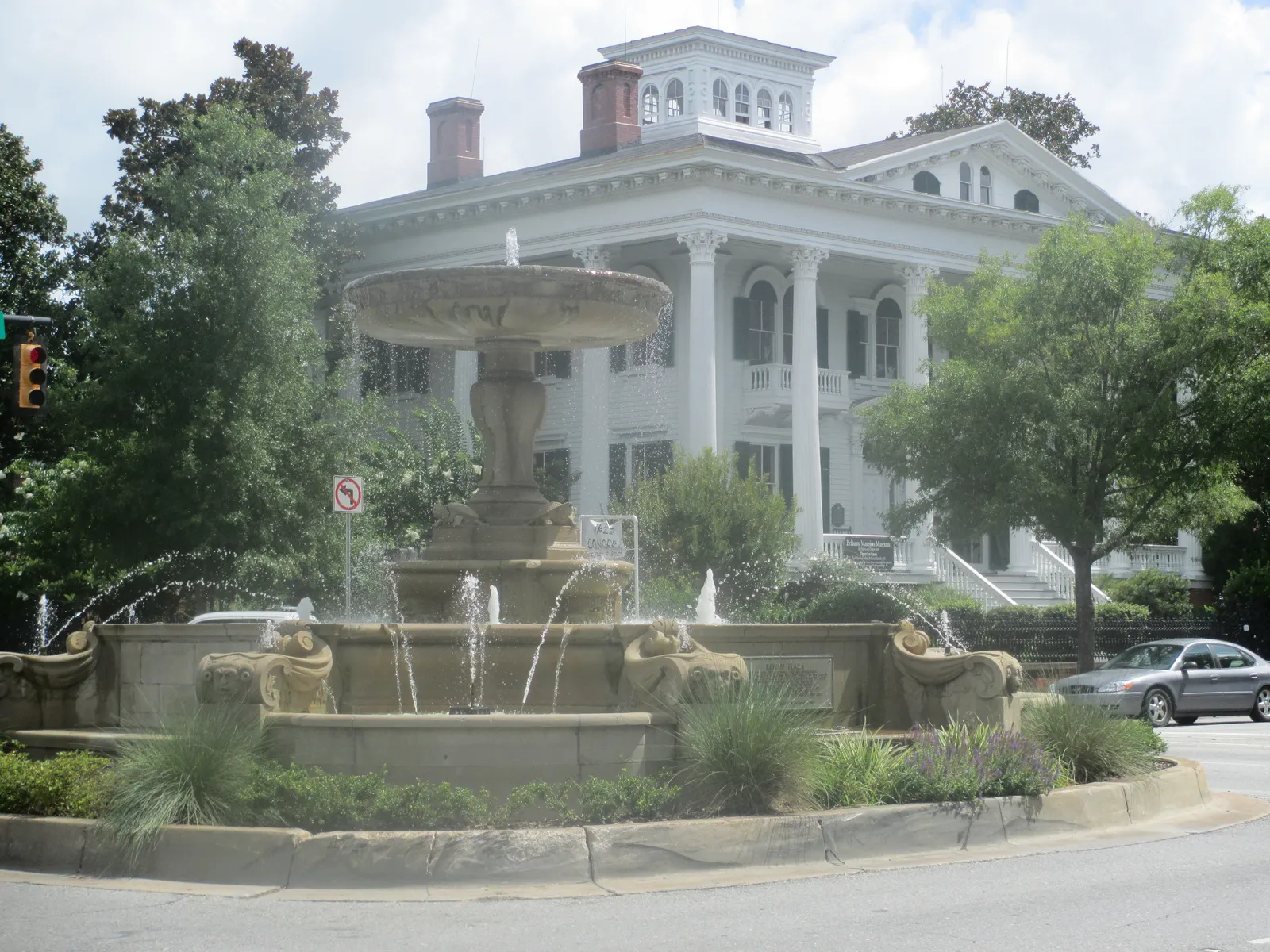
Dr. John Dillard Bellamy, a physician, merchant, planter, and enslaver, commissioned the house at 503 Market Street. Architect James F. Post and assistant architect Rufus Bunnell designed a large urban residence that blended Greek Revival and Italianate features. Construction ran from late 1859 into early 1861.
The finished mansion contained about 10,000 square feet and 22 rooms. Its most obvious feature is the monumental front portico, but the design also included a belvedere and a carefully planned ventilation system intended to move warm air upward through the house. The Bellamy Mansion Museum’s history of the property describes the building as a mixture of Greek Revival and Italianate styles rather than a pure example of either one.
John and Eliza Bellamy ultimately had ten children. When the family moved into the new house in February 1861, eight children were living with them and Eliza was pregnant. Their son Robert Rankin Bellamy was born in the mansion later that year. This corrects a common mistake in older summaries of the property that give the family nine children in total.
Who Actually Built Bellamy Mansion?
The grandeur of the house cannot be separated from the labor that created it. Bellamy Museum research identifies enslaved craftsmen and free Black artisans among the carpenters, masons, plasterers, porters, and other workers who constructed the site. The museum names people including Elvin Artis, William B. Gould, Henry Taylor, members of the Howe, Price, Sadgwar, and Kellogg families, and others whose work survives in the building.
Behind the mansion stands the original two-story brick slave quarters, completed before the main house. It is a rare surviving example of an urban slave dwelling and has been restored and opened to visitors. The building contained sleeping spaces, laundry functions, and privies. For visitors who want to understand Bellamy Mansion rather than simply photograph its front columns, this part of the site is essential.
According to the museum, Dr. Bellamy owned 115 enslaved men, women, and children across three North Carolina counties by 1860. Around nine enslaved domestic workers lived at the Wilmington property when the family occupied the new house. That history is central to what the museum interprets today, not a side note to the architecture.
What Happened Here During the Civil War?
The Bellamys had very little time to enjoy their new home under normal circumstances. A severe yellow fever epidemic struck Wilmington in 1862, and the family left the city for Floral College near what is now Maxton, North Carolina. They remained away for the rest of the Civil War.
After Wilmington fell to Union forces in February 1865, the Bellamy house was requisitioned for military use. Bellamy Museum research says it served as headquarters for Union military staff, first associated with General John M. Schofield and then Brigadier General Joseph Hawley. William T. Sherman visited commanders at the house during 1865.
The contrast is striking: a mansion commissioned by a wealthy slaveholding family and completed just before the war became, four years later, quarters and headquarters for Union officers. That reversal is one of the strongest pieces of documented history connected to the property—and a better explanation for the house’s atmosphere than any invented tragedy needs to be.
Was Bellamy Mansion Built on Gallows Hill?
No. This is an important correction because the claim is sometimes repeated in Wilmington ghost stories.
Bellamy family recollections do mention a place called Gallows Hill, but the location described by Ellen Bellamy was at the corner of Ninth and Princess Streets, several blocks from the mansion at Fifth and Market. She also noted that Wilmington had more than one execution site over time. The mansion itself was not built on the Gallows Hill described in those family accounts.
That does not remove the darker history from the surrounding city. It simply keeps two real places from being incorrectly merged into one story.
Where the Ghost Lore Comes In
Bellamy Mansion has the ingredients that often produce a long afterlife in local folklore: an imposing nineteenth-century house, generations of family history, war, disease, death, abandonment, restoration, and rooms that still feel very different from modern spaces. Visitors have reported light anomalies, uneasy feelings, and other experiences. A longtime volunteer also told the museum about a “lady in grey” story associated with the house.
Those accounts are interesting as folklore, but they are not evidence that a specific Bellamy family member—or anyone else—haunts the property. The museum’s own writing is careful on this point. It discusses the cultural appeal of ghosts and dark tourism while separating visitor experiences from the historical record.
That is the approach we recommend when reading any Bellamy Mansion ghost story: ask which part is documented, which part comes from a named memoir or museum source, and which part is simply a story repeated over time.
What Happened to the Mansion After the Bellamys?
Ellen Douglass Bellamy, one of the Bellamy children, lived in the house for most of her life and died there in 1946 at age 93. Her memoir, Back With the Tide, became an important family source for memories of the house and nineteenth-century Wilmington, although—as with any memoir—it reflects the perspective of its author.
After Ellen’s death, the property deteriorated. Bellamy descendants organized preservation efforts in the early 1970s, but an arson fire in 1972 caused serious interior damage. Years of stabilization and restoration followed. The property was eventually transferred to Preservation North Carolina, and the Bellamy Mansion Museum of History and Design Arts opened to the public in 1994. Restoration of the original slave quarters was completed in 2014.
Visiting Bellamy Mansion Today
The museum is at 503 Market Street in downtown Wilmington. Visitors can explore the main house, the original slave quarters, grounds, and museum exhibits. The mansion itself requires climbing several flights of stairs and is not fully accessible for visitors with limited mobility; the museum provides a video-tour option for those who cannot climb the house.
As of our September 2026 source check, the museum lists ticket sales and tours during the day, with self-guided and limited guided options. Hours, admission prices, and guided-tour availability can change, so check the official Bellamy Mansion Museum website before visiting.
Is Bellamy Mansion Worth Visiting for Ghost-History Fans?
Yes—especially if you want more than a spooky story. The mansion gives you a chance to see the actual setting behind decades of Wilmington ghost lore while learning about architecture, slavery, the Civil War, family memory, and historic preservation.
If your main interest is paranormal stories, a Wilmington ghost walk may give you more storytelling after dark. If you care about what actually happened at the site, visiting the museum first gives those stories much better context. The strongest experience is not choosing between history and folklore; it is knowing which is which.
Frequently Asked Questions
How old is Bellamy Mansion?
Construction began in 1859 and the Bellamy family moved into the completed house in early 1861.
How many children did John and Eliza Bellamy have?
They had ten children. Eight were living with the family when they moved into the mansion in February 1861, and another son, Robert, was born there later that year.
Did Union soldiers occupy Bellamy Mansion?
Yes. After Wilmington fell in February 1865, the house was used by Union military staff and served as headquarters for officers including Brigadier General Joseph Hawley.
Is the Bellamy Mansion built on a former execution site?
No. Bellamy family accounts place a historic Gallows Hill at Ninth and Princess Streets, not beneath the mansion at Fifth and Market.
Does the museum say the mansion is haunted?
The museum discusses visitor reports and paranormal interest but does not present haunting claims as verified historical fact. Its own published approach is deliberately neutral.
Sources & Further Reading
This article was fact-checked against primary museum and preservation sources. Paranormal experiences are presented as reports or folklore, not established fact. Source check: September 6, 2026.
- Bellamy Mansion Museum — The Place: architecture, construction, slave quarters, and visitor access.
- Bellamy Mansion Museum — The People: Bellamy family, enslaved workers, free Black artisans, and builders.
- Bellamy Mansion Museum — War and Politics: A House Divided: Civil War history and Union occupation.
- Bellamy Mansion Museum — Haunted by Hauntings: the museum’s discussion of visitor ghost reports, paranormal investigations, and dark tourism.
- Preservation North Carolina — Bellamy Mansion Museum & Slave Quarters: preservation, restoration, and museum history.