
If you search for haunted places in downtown Wilmington, the former Bulluck Hospital often appears with stories about children, footsteps and unexplained sounds. The history is real; the haunting is much harder to document.
Period city directories, medical records and oral histories show that Bulluck Hospital was an active private hospital on North Front Street for decades. They also correct two details that are often repeated online: the hospital did not simply disappear when its founder died in 1944, and the surviving building is not an abandoned or private residential property today.
What Was Bulluck Hospital?
Bulluck Hospital was a private medical facility associated with Wilmington surgeon Dr. Ernest Southerland Bulluck. A 1944 notice in Southern Medicine and Surgery reported that Bulluck opened the hospital in 1922 after returning to Wilmington following World War I. The same notice records his death at the hospital on March 13, 1944.
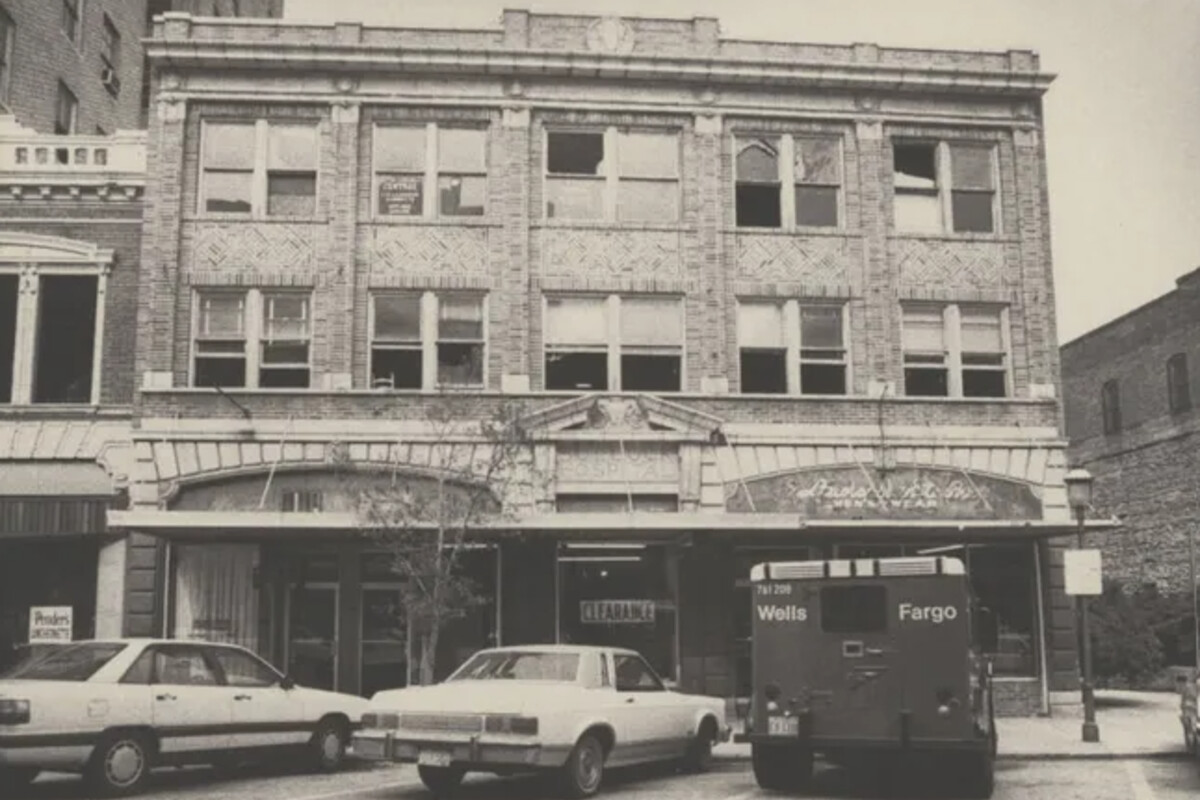
The hospital was not a vague piece of local memory. It appears repeatedly in Wilmington's city directories. The 1924 Wilmington city directory preserved by DigitalNC lists “Bulluck Hospital” at 213 N. Front Street and names Drs. Ernest S. Bulluck and R. H. Davis. The same directory separately lists other businesses inside the “Bulluck Hospital Building,” showing that the property was part of an active downtown commercial block as well as a medical facility.
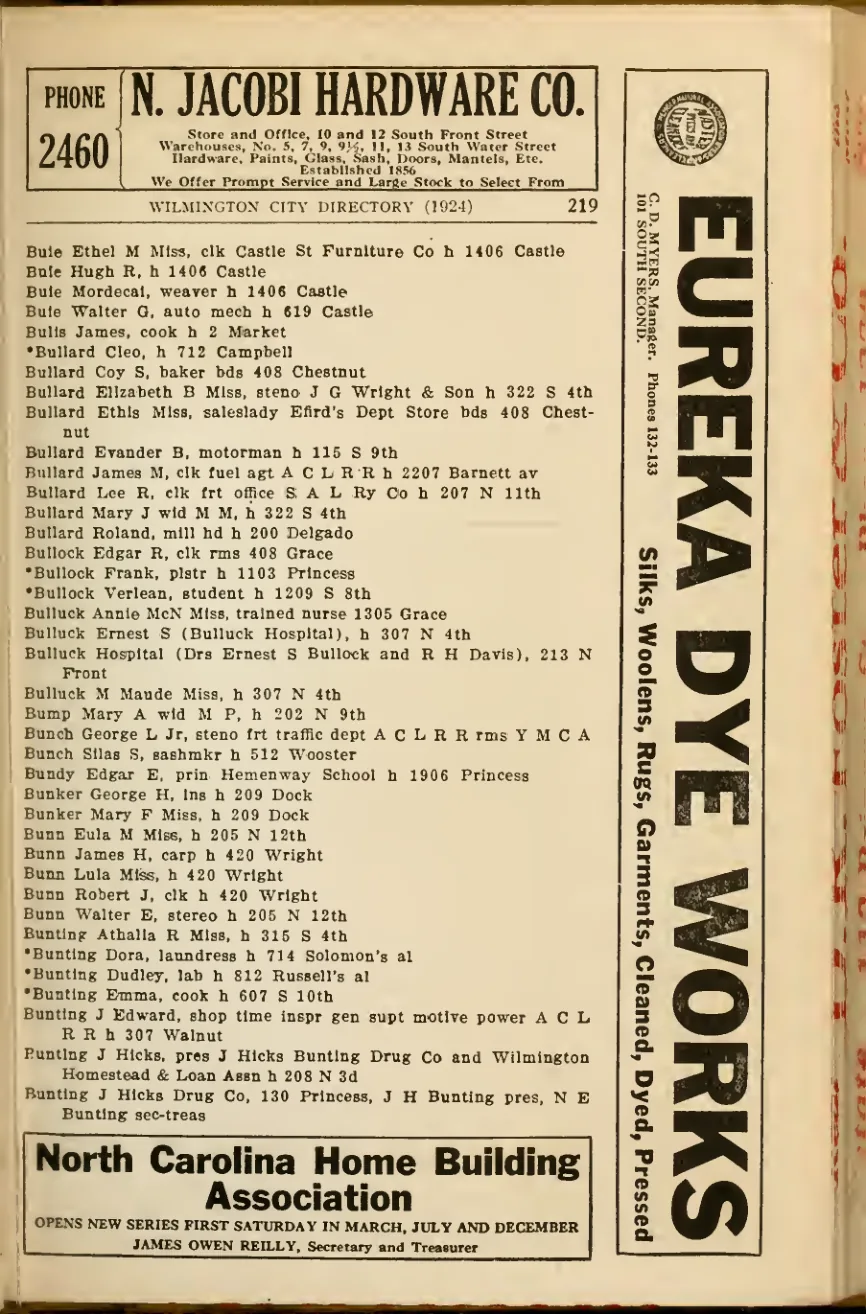 Photo credits
A contemporary newspaper gives a glimpse of what that meant in practice. In March 1924, the Wilmington Morning Star reported that a construction worker injured in a fall was rushed to Bulluck Hospital, examined by surgeons and found to have escaped broken bones or apparent internal injuries.
Why Do Historic Records Show Different Addresses?
One reason Bulluck Hospital can be confusing to research is that the address changes in surviving records. Directories in the 1920s and 1930s commonly list the hospital as 207 or 213 N. Front Street. By 1940, the directory lists Dr. Ernest S. Bulluck and Bulluck Hospital at 221 N. Front Street.
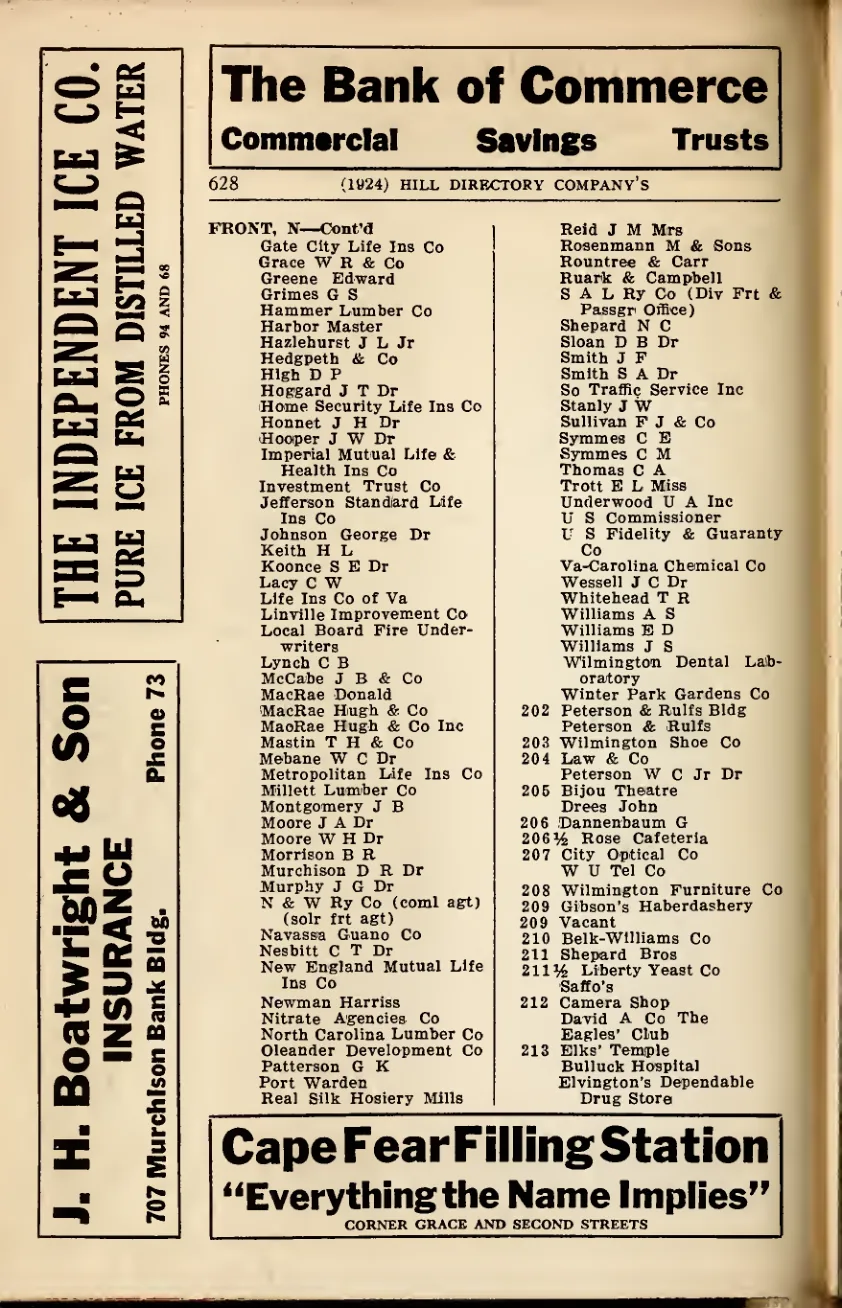 Photo credits
There is another archival wrinkle. North Carolina State University's North Carolina Architects & Builders database notes that architect James B. Lynch was commissioned in 1920 for a proposed hospital at the southeast corner of Third and Grace streets for Drs. Bulluck and Davis. The later city directories, however, place the operating Bulluck Hospital on North Front Street.
Those records do not by themselves tell us whether the 1920 project was changed, abandoned, relocated or connected to the later Front Street facility. Rather than turn that gap into a neat but unsupported story, it is more accurate to leave it as an unresolved detail in the archival record.
What Happened After Dr. Bulluck Died?
Another common version of the story says Bulluck Hospital closed when Dr. Bulluck died in 1944 and then sat largely empty. The historical record is more complicated.
A 2004 oral-history interview in the University of North Carolina Wilmington archives records physician R. T. Sinclair Jr. recalling that, after Bulluck's death, local doctors kept the hospital operating because Wilmington still needed hospital beds during the wartime period. The 1947 city directory supports that recollection: it lists Bulluck Hospital Clinic Inc. at 221 N. Front Street.
Even a 1956 Wilmington directory still identifies people as employees or nurses of the Bulluck Hospital Clinic. That means the simple “1922–1944 and then abandoned” timeline repeated in some ghost-story versions is not accurate.
So Where Did the Ghost Stories Come From?
The best-known Bulluck Hospital legends center on children. Stories circulated online by at least the 2000s describe laughter or crying from an upper floor, a young boy appearing near a staircase, doors moving, an elevator arriving without a visible passenger, and footsteps in empty hallways.
Those accounts are part of Wilmington's local ghost lore, not documented medical history. One widely shared version appeared in a 2007 geocaching description, which also claimed that the upper floor had once been used as an informal hostel. That page is useful for tracing how the legend circulated, but it is not a primary historical source and does not provide evidence that the paranormal events occurred.
The distinction matters. A former hospital naturally lends itself to ghost stories because people associate hospitals with illness, anxiety, birth and death. That emotional setting can make later anecdotes feel plausible without making them verifiable.
Is the Old Bulluck Hospital Abandoned Today?
No. This is one of the most important corrections to older haunted-place descriptions.
The building associated with Bulluck Hospital at 221 N. Front Street still stands in downtown Wilmington and is actively used. Wilmington Downtown currently lists ACES Gallery at 221 N. Front Street, and other organizations and offices also use suites in the building. A 2026 Wilmington StarNews report likewise described the former hospital building as standing and heavily used.
So this is not an abandoned hospital to explore. Visitors interested in the history should treat it as an active downtown building: view the exterior from public areas, visit public-facing businesses only during their normal hours, and do not enter private offices or restricted spaces looking for paranormal activity.
Is Bulluck Hospital Really Haunted?
There is no reliable evidence that establishes paranormal activity at the former Bulluck Hospital. The children's voices, shadow figures, footsteps and elevator stories belong to anecdote and folklore.
What is well documented is more interesting than the old article gave it credit for: Bulluck Hospital opened in the early 1920s, treated real patients in downtown Wilmington, survived the death of its founder, continued as a clinic under other physicians, and occupied a building that remains part of downtown life today.
That gives the ghost stories a real historical setting without requiring us to present the supernatural claims as fact.
Why the Site Still Matters
Bulluck Hospital is a useful example of how Wilmington's ghost lore grows around places with layered histories. The strongest version of the story is not “an abandoned haunted hospital.” It is a former medical institution whose documented history was gradually overlaid with stories about children, unexplained sounds and empty corridors.
If you enjoy separating documented history from local legend, you may also want to read our guide to abandoned and forgotten places near Wilmington, where we make the same distinction between genuinely abandoned sites and historic buildings that are still in active use.
Sources
- Southern Medicine and Surgery, 1944 — obituary notice stating that Dr. Ernest S. Bulluck opened Bulluck Hospital in 1922 and died there on March 13, 1944.
- Hill Directory Co.'s Wilmington City Directory, 1924 — DigitalNC — Bulluck Hospital listed at 213 N. Front Street; Drs. Ernest S. Bulluck and R. H. Davis named.
- Hill's Wilmington City Directory, 1947 — DigitalNC — Bulluck Hospital Clinic Inc. listed at 221 N. Front Street.
- Interview with R. T. Sinclair Jr., May 7, 2004 — UNCW Archives & Special Collections — recollection of physicians keeping the Bulluck clinic operating after Dr. Bulluck's death.
- James B. Lynch — North Carolina Architects & Builders, NC State University Libraries — 1920 hospital commission for Drs. Bulluck and Davis.
- Wilmington Downtown — ACES Gallery — current public-facing use at 221 N. Front Street.
Source review: September 6, 2026. Paranormal claims in this article are presented as local folklore and reported experiences, not established fact.