
The Cotton Exchange is one of those downtown Wilmington places that is easy to misunderstand at first glance. It looks like a historic shopping complex, but the buildings were not originally built as one shopping center—and they did not all begin life in the cotton trade.
What visitors see today is an eight-building collection of restored commercial and industrial structures tied together by brick passages, courtyards, stairs, and walkways. Their history includes milling, wholesale trade, printing, a laundry, seed sales, department-store space, and—most famously—cotton exporting.
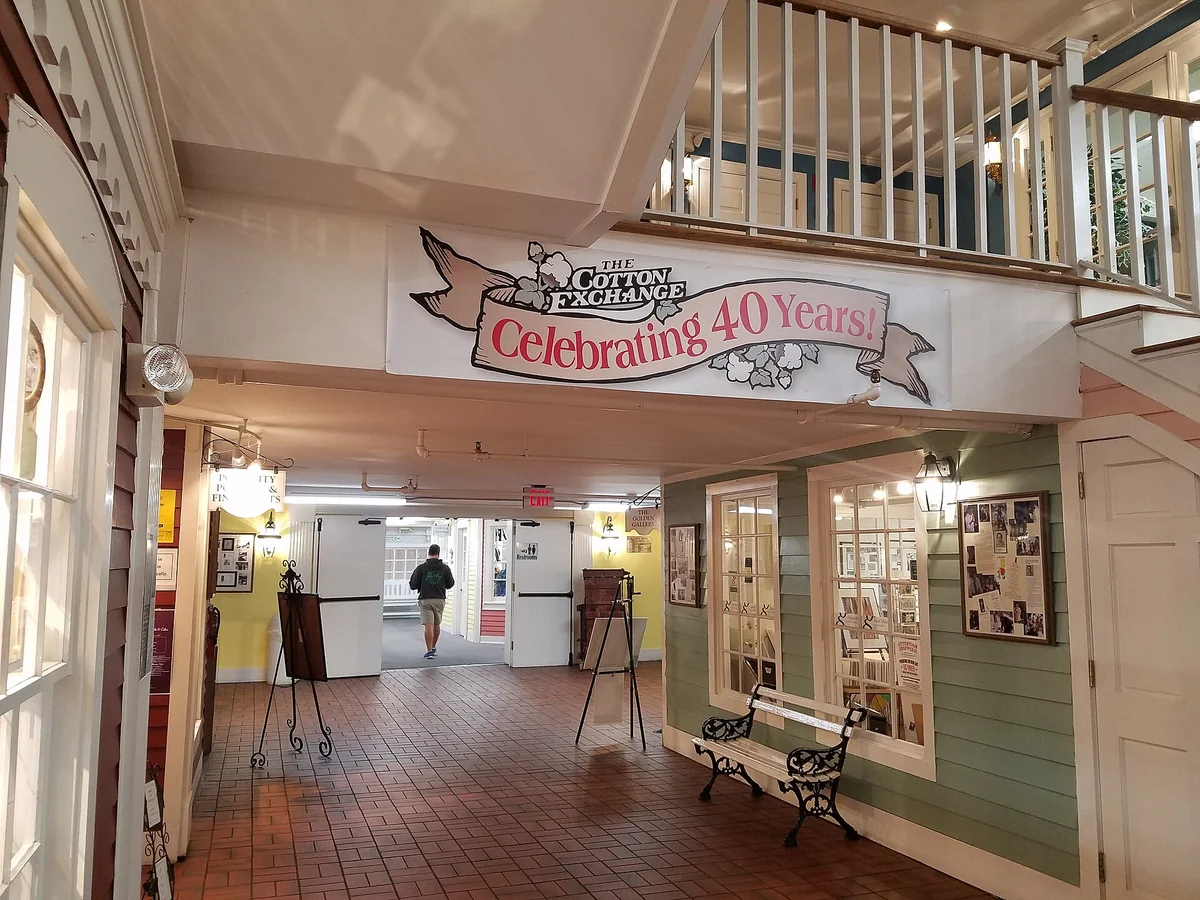
That layered history is the real reason the Cotton Exchange is worth a stop. You can browse the complex in less than an hour, but understanding what the buildings were before 1976 makes the brick corridors feel very different from a purpose-built retail center.
What exactly is the Cotton Exchange?
The modern Cotton Exchange occupies a block around 321 N. Front Street in Wilmington’s historic downtown. Its own history describes eight interconnected buildings that were adapted into a commercial complex in the 1970s rather than demolished.
The name can be misleading if you imagine a single nineteenth-century exchange hall where cotton was traded. In reality, the complex includes buildings with several different past uses. The name is closely associated with Alexander Sprunt & Son, the Wilmington cotton-export firm that occupied part of the block in the twentieth century.
A useful piece of primary evidence comes from the 1924 Wilmington city directory preserved by DigitalNC. It lists “Alexander Sprunt & Son Inc., cotton exporters” at 319–321 N. Front. That gives the cotton connection a much firmer basis than simply repeating the modern name of the attraction.
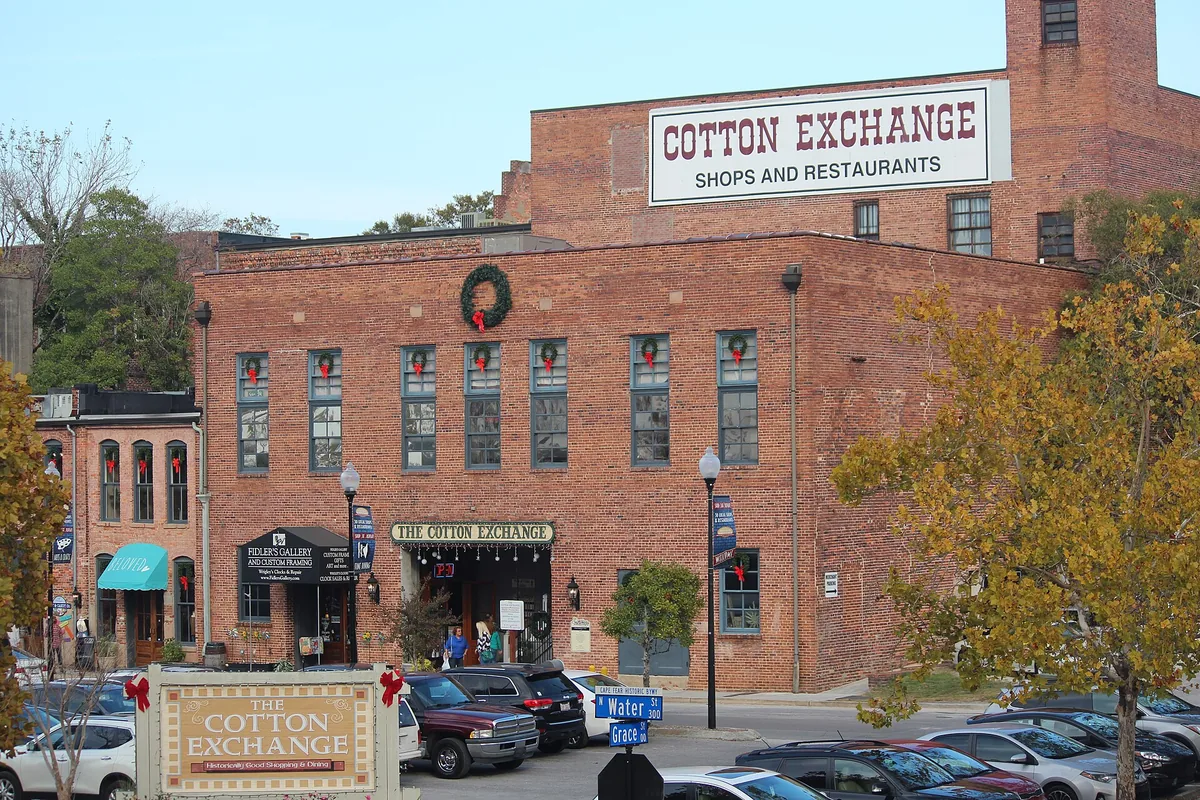 Photo credits
Before cotton: mills, warehouses and working buildings
The Cotton Exchange’s official history traces part of the complex to the Cape Fear Flour and Pearl Hominy Mill in 1884. The site was part of a working waterfront district, not a tourist zone. Goods moved through Wilmington by rail, river and ocean, and businesses near the river were built around storage, processing and distribution.
Other buildings in the present complex had very different uses over time. The official timeline records a Chinese laundry in 1917, a wholesale notions business in the 1930s, a seed company beginning in 1938, printing operations, grocery and peanut-cleaning businesses, and a Sears, Roebuck & Company presence in the 1930s.
This matters because it changes the story from “an old cotton building” into something more accurate: a surviving piece of Wilmington’s former commercial and industrial waterfront.
Alexander Sprunt & Son and Wilmington’s cotton trade
Alexander Sprunt & Son became one of Wilmington’s most important cotton-export businesses. The Cotton Exchange’s own history says the company moved into the Sprunt Building in 1919, and contemporary city-directory evidence places the firm at 319–321 N. Front Street a few years later.
The scale of the business was not invented for modern tourism. Academic work on Alexander Sprunt & Son describes it as a major cotton-marketing and export enterprise with extensive records of buying, shipping and international trade. An oral history in the UNCW Archives also records family recollections of the firm buying cotton for export and maintaining offices beyond Wilmington.
For a visitor, the key point is simple: the name “Cotton Exchange” is not decorative branding. It reflects a genuine phase in the block’s working history, even though the eight-building complex contains much more than that one story.
The 1970s: when the buildings nearly disappeared
The most important chapter in the Cotton Exchange story may actually be the one that happened after the cotton era.
Downtown Wilmington struggled after major businesses and railroad operations moved away. The Cotton Exchange’s official history notes that the Atlantic Coast Line Railroad moved its headquarters to Florida in 1961, contributing to decline around the old commercial district. By the 1970s, demolition was a real possibility for many older buildings.
The complex’s history says that in 1974, with the eight buildings facing demolition, developers Joe Reaves and Mal Murray acquired them and chose rehabilitation instead. Research from the University of North Carolina Wilmington on downtown preservation likewise describes the project as saving eight buildings and reopening them as the Cotton Exchange in 1976.
This is also where an old claim needs careful wording. The Cotton Exchange’s official site calls the project North Carolina’s first downtown complex to adapt and repurpose existing historic buildings. That is more specific—and more defensible—than saying it was the first adaptive-reuse project of any kind in the entire state.
The Cotton Exchange opened in 1976. In 2026 it marked its 50th anniversary, and the property remains a functioning group of locally owned businesses rather than a preserved museum block. The Cotton Exchange’s 50th-anniversary history says the Bullock family has owned the property since 1990.
What can you still notice when you visit?
This is not a house museum where every room has been frozen to one historical period. The buildings are actively used, and modern businesses occupy the spaces. The history is easier to notice in the layout and fabric of the complex:
Brick passages and courtyards: the route between buildings feels more like moving through a small piece of an old commercial district than walking through a conventional indoor mall.
Multiple building levels: stairs, changes in elevation and separate entrances reflect the fact that these structures were not designed as one modern shopping center.
Old commercial scale: some spaces make more sense when you remember that parts of the block once supported milling, warehousing and wholesale trade rather than tourism.
Historic reuse: perhaps the most important feature is simply that the buildings survived. Their current use is itself part of Wilmington’s preservation history.
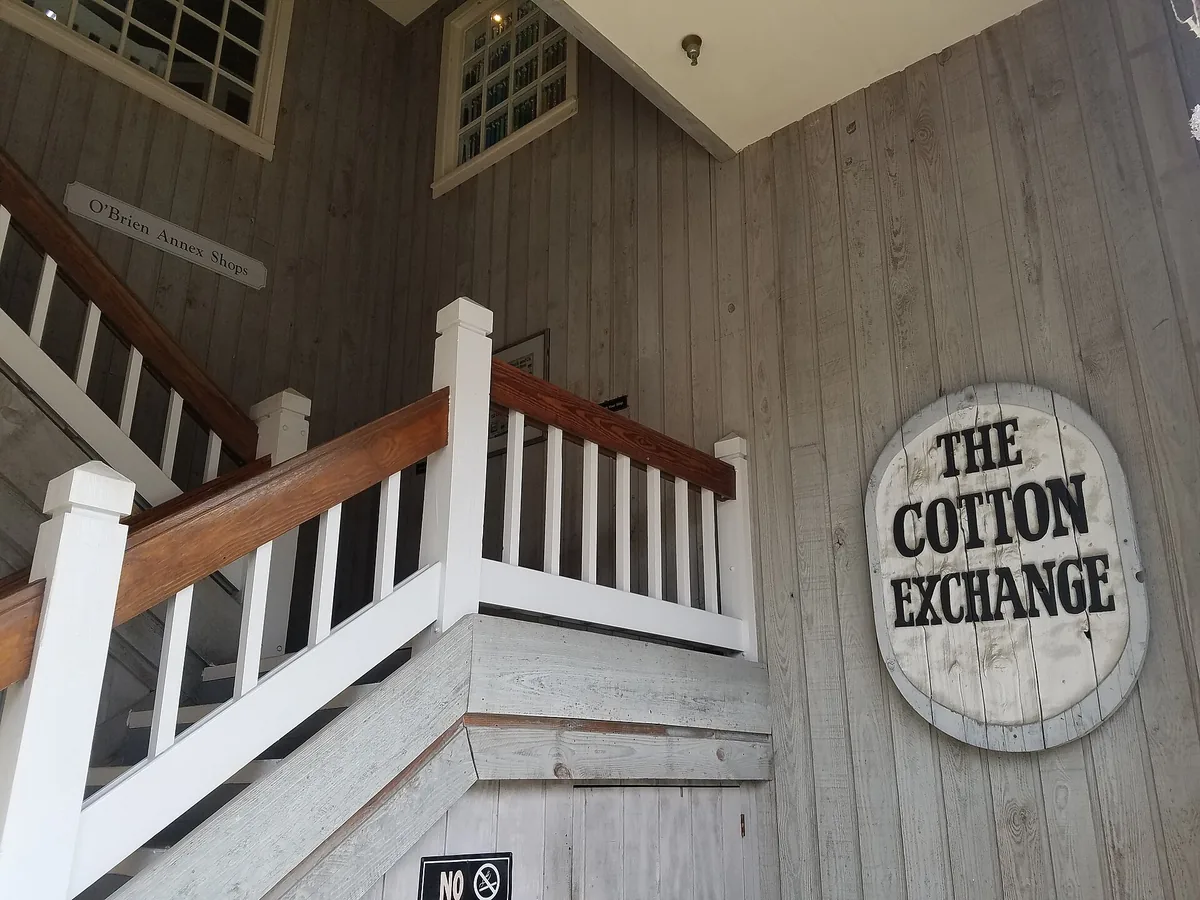 Photo credits
Is the Cotton Exchange haunted?
The Cotton Exchange has been part of Wilmington ghost lore for years, but the historical evidence and the paranormal claims should be kept separate.
Local television station WWAY reported in 2013 on a Haunted Cotton Exchange walking tour and interviewed a guide who described visitors and shopkeepers reporting sounds, shadows and other unexplained experiences. A later WWAY feature explored additional supernatural stories attached to the complex. Those reports establish that ghost stories are genuinely part of the site’s modern folklore; they do not establish that paranormal activity has been proven.
That distinction matters. The documented history—mills, exporters, workers, fires, decline and preservation—is strong enough on its own. If you enjoy ghost stories, the old buildings give those stories atmosphere. If you are skeptical, you can still visit without needing to accept any supernatural explanation.
For a broader look at how Wilmington legends change as they are retold, see our guide to Wilmington ghost stories and local legends.
Planning a visit
Address: The Cotton Exchange is at 321 N. Front Street in downtown Wilmington, close to the Cape Fear River and Riverwalk.
How long to allow: If you mainly want to see the architecture and passages, roughly 20–40 minutes can be enough. Allow longer if you plan to browse the independent shops or explore the Wilmington Walk of Fame at the Water Street entrance.
Hours: The official site currently lists administrative complex hours of Monday–Saturday, 10:00 a.m.–5:30 p.m., with most shops open Sunday from noon–4:00 p.m. Individual businesses can keep different hours, so check the official Cotton Exchange information before making a special trip.
Parking: The complex currently advertises customer parking with validation, including up to three hours free when validated by participating businesses. Parking policies can change, so confirm the current terms when you arrive.
Footing: Expect brick surfaces, stairs and changes in level. If mobility is a concern, review entrances and your route before exploring the whole complex rather than assuming every passage is step-free.
Best way to combine it: It works naturally with a Riverwalk stroll or other downtown historic stops because you do not need a timed tour to enter the public shopping areas.
Is the Cotton Exchange worth visiting?
Yes—if you treat it as a preserved piece of downtown rather than only a shopping stop.
The Cotton Exchange is most interesting when you know that the eight buildings survived a period when demolition was a realistic outcome. The modern businesses give the complex a purpose, but the real story is how a working waterfront block moved through milling, wholesale trade, cotton exporting, decline and adaptive reuse.
For visitors interested in Wilmington history, that makes it worth a short detour even if you do not plan to shop. And for visitors interested in the city’s haunted reputation, it is a useful example of a place where well-documented history and much less verifiable ghost lore now occupy the same space.
Sources & Further Reading
This article separates documented history from later folklore. Key sources used for factual checks include:
- The Cotton Exchange — official history, including the building timeline, 1970s preservation and opening in 1976.
- Hill Directory Co.’s Wilmington City Directory (1924), DigitalNC, documenting Alexander Sprunt & Son Inc. at 319–321 N. Front Street.
- UNCW graduate research on historic preservation in downtown Wilmington, including the Cotton Exchange rehabilitation and 1976 opening.
- UNCW Archives — Kenneth Sprunt oral history, for family and business context on Alexander Sprunt & Son.
- WECT — Cotton Exchange celebrates 50 years in downtown Wilmington, April 2, 2026.
- WWAY — Haunted Cotton Exchange, used only to document the existence of reported ghost lore, not as proof of paranormal activity.
Historical details and current visitor information were reviewed on September 6, 2026. Business hours, parking policies and tenant listings can change.