
If you search for haunted places in Wilmington, North Carolina, Thalian Hall appears again and again. That reputation is easy to understand: the building has been part of downtown life since 1858, generations of performers have crossed its stage, and the theater now offers its own haunted-history tour.
But Thalian Hall is interesting even before the ghost stories begin. Its documented history is unusually rich, and that history is the best place to start if you want to understand why so many legends have gathered around the building.
What Is Thalian Hall?
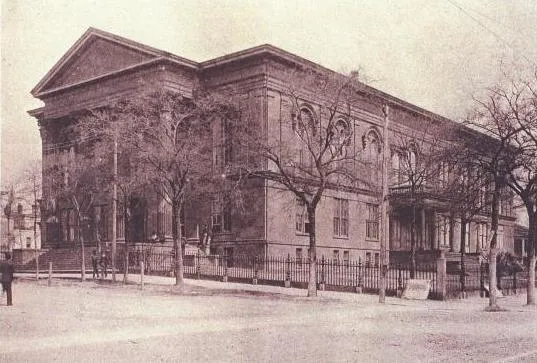
Thalian Hall is part of Wilmington's historic City Hall complex in the center of downtown. Construction took place from 1855 to 1858, and the building was designed by New York theater architect John Montague Trimble.
According to Thalian Hall's official history, it is the only surviving theater designed by Trimble. The original building combined city government, a library and an opera house under one roof. The auditorium could seat about 1,000 people at a time when Wilmington was North Carolina's largest city.
That dual civic-and-cultural role matters. Thalian Hall was not built as a tourist attraction or as a haunted house. For more than a century and a half it has been a working public building and performance space, which means the stories associated with it developed around a place that people actually used day after day.
A Theater That Stayed Active Through Wilmington's History
Wilmington already had a strong theatrical tradition before Thalian Hall opened, but the new venue helped make the city an important stop for touring performers. Its official records list appearances by figures such as Buffalo Bill Cody, John Philip Sousa, Lillian Russell and Maurice Barrymore. Thalian Hall's current history tour also highlights performers and speakers including Frederick Douglass, Oscar Wilde and Wilmington-born opera singer Caterina Jarboro.
The theater did not simply freeze in its 1858 form. In 1909, major changes included electric stage lighting, a new proscenium arch and the removal of the side balconies. The venue was also known for a time as the Academy of Music.
Thalian Hall survived periods when demolition was considered, and a fire in 1973 caused serious damage. The North Carolina General Assembly later appropriated matching funds toward restoration, specifically noting the building's architectural, historical and cultural importance. The restored theater reopened and continued to evolve through later renovation projects.
For independent confirmation of its significance, the North Carolina State Historic Preservation Office lists City Hall–Thalian Hall on the National Register of Historic Places, where it has been listed since 1970. The Library of Congress Historic American Buildings Survey also describes it as one of the nation's few remaining examples of 19th-century theater architecture.
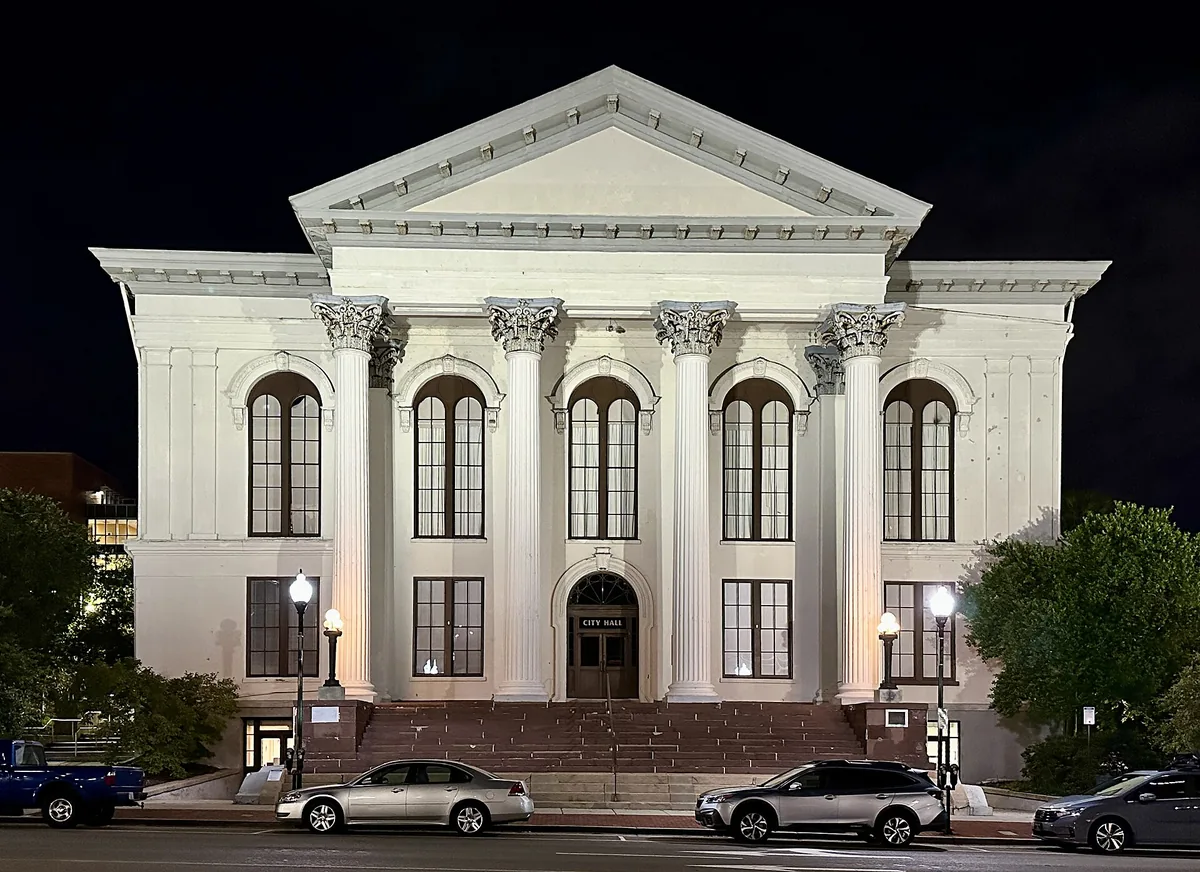 Photo credits
So, Is Thalian Hall Haunted?
There is no historical record or scientific evidence that can establish that Thalian Hall is literally haunted. What can be documented is that ghost stories have become part of the theater's living culture.
That distinction is important. Thalian Hall itself currently offers a Haunted Tour and describes it as a journey through more than a century and a half of theatrical lore. The theater says the tour includes firsthand accounts from actors, staff and historians involving unexplained experiences, including stories of ghostly stagehands and spectral audience members.
Those reports are meaningful as oral history and local folklore, but they are still reports. A strange sound in an old theater, a figure glimpsed in a balcony or a story repeated backstage cannot by itself prove a paranormal explanation.
That makes Thalian Hall more interesting, not less. Unlike a story built around an abandoned ruin, the lore here developed inside a working theater where darkness, backstage machinery, balconies, curtains, acoustics and generations of performers already create an unusual atmosphere.
The Ghost Stories You Should Treat Carefully
Some online versions of Thalian Hall's haunted history go much further than the theater's own published material. Claims about bodies beneath the building, specific deaths producing specific ghosts, or named spirits permanently occupying particular rooms are often repeated without a traceable primary source.
We did not find those claims established in Thalian Hall's official history, the North Carolina historic-register material or the Library of Congress building documentation. For that reason, this guide does not present them as historical facts.
A useful rule for Thalian Hall is simple: if the claim concerns the building's construction, performers, renovations or fire, it can usually be checked against historical records. If the claim concerns a spirit, apparition or supernatural cause, it should be read as reported experience or folklore unless stronger evidence is available.
Why a Historic Theater Generates So Many Ghost Stories
Old theaters are unusually good settings for folklore. They contain spaces the audience rarely sees, from wings and fly systems to stairways, dressing areas and dark balconies. Sounds travel in unexpected ways. Performers also pass stories between productions, so a strange experience can become part of backstage tradition long after the original event.
At Thalian Hall, that effect is amplified by continuity. The venue has been tied to Wilmington's cultural life since the 1850s. It has survived war, changing technology, renovation, fire and generations of audiences. Even visitors who do not believe in ghosts can understand why a place with that much accumulated memory develops a supernatural reputation.
What Can You See on a Thalian Hall Tour?
Thalian Hall currently offers more than one type of guided experience, and they are not interchangeable.
History Tour: The theater describes its standard history tour as a 45–60 minute look at the building, its architecture, performers and stagecraft. It can include details such as the preserved 1858 stage curtain and the theater's historic Thunder Roll effect.
Haunted Tour: The haunted version focuses on theatrical lore and accounts of unexplained experiences. Thalian Hall currently recommends this tour for ages 13 and older, describing it as spooky but not an extreme scare attraction.
African American Experience Tour: This separate tour examines the relationship between Thalian Hall and Wilmington's African American community from 1858 to the present, including artists such as Marian Anderson and Caterina Jarboro. It offers a different and important historical perspective that ghost-focused coverage often overlooks.
Tour schedules and access can change around performances and building operations, so visitors should check Thalian Hall's current official tours page before planning a visit.
Is Thalian Hall Worth Visiting If You Do Not Believe in Ghosts?
Yes. In fact, the building's strongest reason to visit has nothing to do with proving the paranormal.
Thalian Hall gives visitors a rare chance to experience a 19th-century American theater that is still functioning as a performance venue. Its architecture, long list of performers, civic history and survival through repeated changes give it a depth that many "haunted" locations do not have.
If you enjoy ghost stories, the lore adds another layer. If you are skeptical, you can treat those stories as part of Wilmington's oral tradition while still appreciating the documented history around them.
Practical Visitor Notes
Thalian Hall is located at 310 Chestnut Street in downtown Wilmington. It remains an active performing arts venue, so public access depends on scheduled performances, tours and building operations.
The official visitor information notes that an elevator serves several upper areas and that accessible seating is available, although some sections include steps. Visitors with specific mobility requirements should confirm the details of the exact tour or event before arriving.
If you are seeing Thalian Hall as part of an outdoor Wilmington ghost walk, remember that walking past the building is different from taking an interior Thalian Hall tour. A downtown guide may tell stories from outside, while the theater's own tours can provide access and context that an exterior stop cannot.
What Makes Thalian Hall Different From Other Haunted Places in Wilmington?
Thalian Hall stands out because the history does not depend on the haunting claim. The building is independently significant as architecture, as a civic landmark and as a continuously used cultural space.
That gives the ghost lore a stronger setting. Instead of trying to make a thin historical record sound mysterious, the better approach is the opposite: understand the real theater first, then decide what you make of the unexplained stories that have grown around it.
Frequently Asked Questions
When was Thalian Hall built?
Construction took place between 1855 and 1858. The theater opened in 1858 as part of a combined City Hall and cultural complex.
Is Thalian Hall really haunted?
Thalian Hall has a long tradition of reported unexplained experiences and now offers an official haunted tour, but those accounts do not constitute scientific proof of paranormal activity. They are best understood as firsthand reports, theatrical lore and local folklore.
Did famous performers appear at Thalian Hall?
Yes. The theater's historical records include performers and public figures such as Buffalo Bill Cody, John Philip Sousa, Lillian Russell, Frederick Douglass and Oscar Wilde, among many others.
Was Thalian Hall damaged by fire?
Yes. A 1973 fire damaged the theater and was followed by restoration work. North Carolina legislation from 1975 specifically provided matching funds to help restore the historic interior.
Can you take a haunted tour inside Thalian Hall?
Thalian Hall currently advertises its own Haunted Tour, recommended for ages 13 and older. Availability can change, so check the theater's official tour schedule before visiting.
Sources & Further Reading
- Thalian Hall Center for the Performing Arts — Official History
- Thalian Hall — Official Tours
- North Carolina State Historic Preservation Office — National Register Listings
- Library of Congress — Historic American Buildings Survey: Wilmington City Hall/Thalian Hall
- North Carolina General Assembly — 1975 Restoration Appropriation for Thalian Hall
Sources reviewed September 2026. Historical claims above are separated from paranormal reports so that local folklore is not presented as documented fact.