
Moored across the Cape Fear River from downtown Wilmington, Battleship NORTH CAROLINA is one of the city’s most recognizable landmarks. It is also frequently described as haunted. Those two identities are not equally documented.
The history of USS NORTH CAROLINA (BB-55) is exceptionally well recorded: construction began in 1937, the ship was commissioned in 1941, she fought across the Pacific during World War II, and she later became North Carolina’s memorial to the state’s World War II dead. The ghost stories are different. They come from staff anecdotes, visitors, television programs and paranormal investigation groups. Even the Battleship’s own FAQ acknowledges that paranormal investigators use the ship, but it does not present haunting as established fact.
So, is Battleship NORTH CAROLINA haunted? There is no verified historical or scientific evidence that proves it. There is, however, a long-running body of ghost lore attached to a real warship where sailors were killed and wounded in combat. Understanding that distinction makes the stories more interesting, not less.
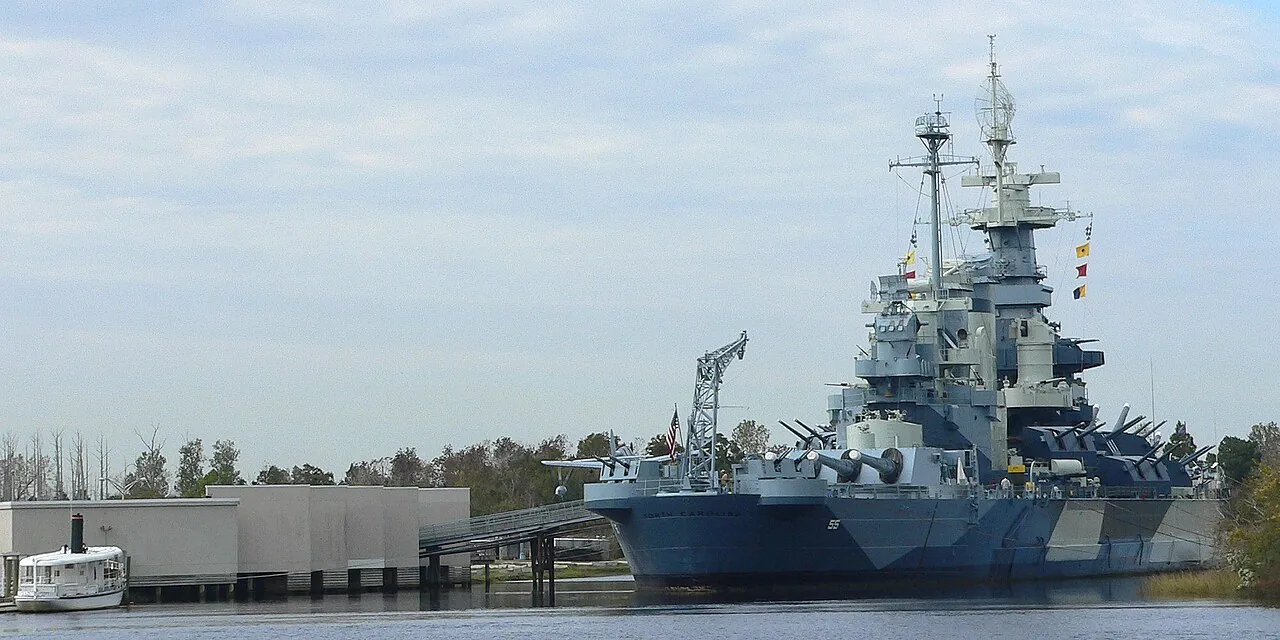
The real story of the “Showboat”
USS NORTH CAROLINA was laid down at the New York Navy Yard on October 27, 1937, launched on June 13, 1940, and commissioned on April 9, 1941. She was the first of the U.S. Navy’s new generation of fast battleships to enter service after a long gap in American battleship construction.
The nickname “Showboat” is sometimes explained incorrectly. It was not originally a reference to enemy claims that the ship had been sunk. The U.S. Naval History and Heritage Command traces the nickname to the extraordinary attention NORTH CAROLINA received during fitting out and sea trials. Sailors aboard her sister ship, USS WASHINGTON, joked that the heavily publicized vessel was “that Showboat,” and NORTH CAROLINA’s crew embraced the name.
You can read the Navy’s detailed service history in the Naval History and Heritage Command record for USS NORTH CAROLINA.
What happened to USS NORTH CAROLINA during World War II?
NORTH CAROLINA entered the Pacific in 1942 and quickly became part of the carrier-centered naval war. At the Battle of the Eastern Solomons in August 1942, her antiaircraft batteries helped defend American carriers against Japanese aircraft. Her role throughout much of the war was not simply to fire her 16-inch guns at shore targets; she also screened fast carrier task forces from air attack.
On September 15, 1942, the Japanese submarine I-19 hit NORTH CAROLINA with a torpedo on the port side. Five men were killed. Damage-control teams corrected the ship’s list quickly, and after repairs she returned to combat.
NORTH CAROLINA later supported operations in the Gilberts, Marshalls and Marianas, fought through the Battle of the Philippine Sea, supported the invasions of Iwo Jima and Okinawa, and operated near Japan at the end of the war. During the Okinawa campaign in April 1945, friendly antiaircraft fire struck the ship, killing three men and wounding dozens.
North Carolina’s Department of Natural and Cultural Resources records 10 men killed in action and 67 wounded during the ship’s wartime service. The state and Battleship museum credit her with 15 battle stars. Older Navy publications sometimes list 12; that discrepancy came from omitted campaign credits that were later corrected.
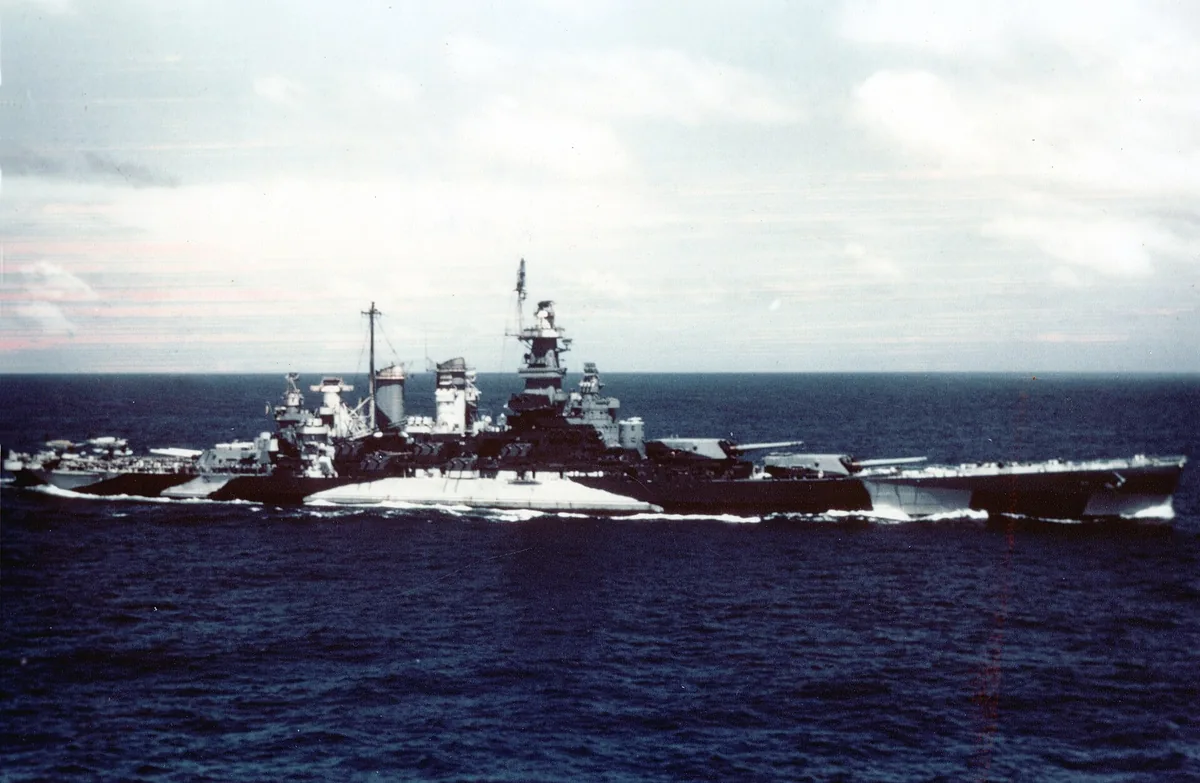 Photo credits
Why do people say the Battleship is haunted?
The ship’s paranormal reputation grew after its military career ended. Former staff, visitors and paranormal groups have described footsteps, voices, shadows and other unexplained experiences in the passageways and compartments. A recurring modern legend describes a young sailor seen aboard the ship, sometimes linked by storytellers to the 1942 torpedo attack.
That last detail needs caution. Five sailors really were killed by the September 1942 torpedo strike, but the historical record does not identify a particular casualty as the source of a later apparition. Connecting a ghost story to a specific dead sailor without evidence turns folklore into biography, and this article avoids doing that.
The Battleship itself takes a measured position. Its official FAQ answers the question “Is the Battleship haunted?” by noting that the ship is a popular destination for paranormal investigation groups and that paranormal programs are hosted through outside organizations. That confirms the paranormal tradition around the site; it does not verify the supernatural claims.
A useful skeptical example from a real investigation
One of the most instructive reports came from WECT in 2008. A visitor believed he had recorded an unexplained voice during a Battleship ghost event. Paranormal researchers examined the audio but could not control the original environment. Their conclusion was cautious: the sound may have come from the event’s recorded soundtrack rather than anything paranormal.
That episode is a good model for approaching Battleship ghost stories. A strange sound can be genuinely strange to the person who hears it while still having an ordinary explanation. A steel warship contains ventilation equipment, hatches, pipes, machinery spaces and long passageways that can transmit sound in unfamiliar ways. None of this disproves every personal experience, but it explains why careful investigation matters.
The documented losses matter more than invented tragedy
Haunted-location writing often becomes less accurate when a real tragedy is exaggerated to make a story scarier. USS NORTH CAROLINA does not need that treatment. Its wartime losses are already documented and significant.
The men killed in action were not characters in a ghost story. They were members of a crew fighting through the Pacific war. The ship today is a memorial to far more than its own casualties: it serves as North Carolina’s World War II memorial to the thousands of North Carolinians who died while serving during the conflict.
For that reason, the best way to experience the ship is to put the military history first and treat the paranormal stories as a later layer of folklore.
How the Battleship came to Wilmington
NORTH CAROLINA was decommissioned in 1947 and later marked for disposal. When scrapping became a real possibility, North Carolinians launched the statewide “Save Our Ship” campaign. Community groups raised money, and schoolchildren contributed nickels and dimes to help bring the vessel to the state.
The ship reached the Cape Fear River in October 1961 and was dedicated in Wilmington as a memorial in April 1962. That second life matters because it explains why visitors can now walk through spaces that were designed for wartime use rather than tourism.
What visiting the Battleship is actually like
The normal daytime experience is a military-history museum, not a ghost tour. General admission includes a self-guided route through nine levels of the ship. Visitors can see crew living spaces, engineering areas, gun systems, the bridge and other working compartments.
The museum recommends allowing at least two hours, and many visitors stay longer. The ship is not air-conditioned, so below-deck areas can become hot during warm weather.
Mobility is an important consideration. Much of the original ship contains steep ladders, high thresholds, narrow passageways and uneven decks. Visitors using wheelchairs or walkers can tour the main deck and the accessible SECU Memorial Walkway, but most upper and lower areas are not fully accessible.
If you are visiting primarily for history, daytime admission provides much more context than simply viewing the ship from across the river. If your interest is paranormal, remember that ghost investigations are separate programs run by outside organizations rather than the core museum experience.
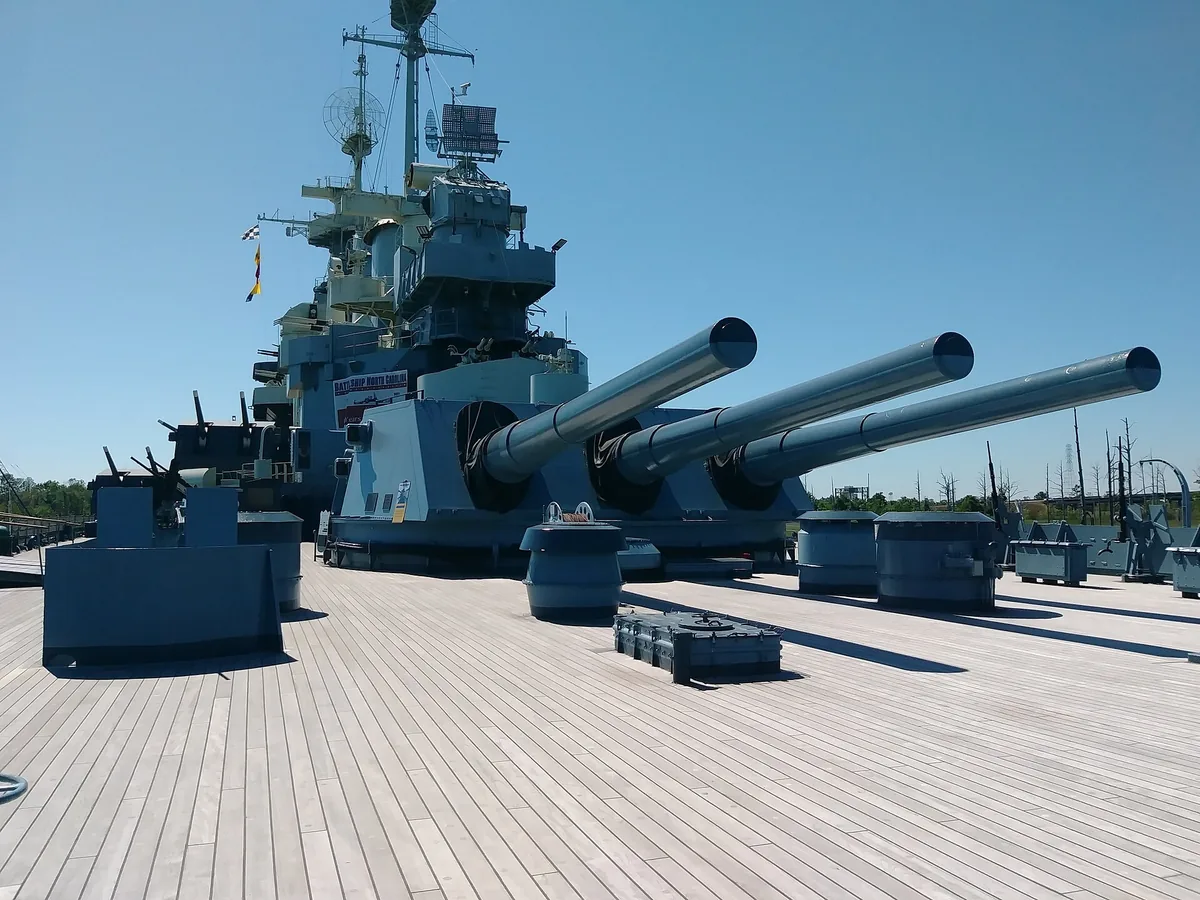 Photo credits
Ghost lore versus documented history
Here is the simplest way to separate the two:
Documented: USS NORTH CAROLINA served in major Pacific operations, survived a Japanese torpedo strike, suffered real combat casualties, earned 15 corrected battle stars, was saved through a statewide campaign and became a World War II memorial in Wilmington.
Documented as modern activity: paranormal investigation groups have investigated the ship, and the Battleship itself acknowledges those programs.
Folklore or anecdote: apparitions of sailors, unexplained footsteps, moving doors, voices and similar experiences reported by visitors or investigators.
Not established: that any particular apparition is a known sailor who died aboard, or that paranormal activity has been proven.
Is Battleship NORTH CAROLINA worth visiting for ghost-story fans?
Yes, if you are also interested in the real history. The setting is naturally atmospheric: a huge 1940s warship, long steel passageways, machinery spaces and compartments built for thousands of sailors. Knowing what happened aboard makes the ghost stories easier to understand in context.
If you want a conventional nighttime storytelling experience in downtown Wilmington, a walking ghost tour is a different type of activity. The Battleship is first a historic ship and memorial. Its haunted reputation is secondary.
For more Wilmington locations where documented history and local legend overlap, see our guide to haunted places in Wilmington.
Frequently asked questions
Is Battleship NORTH CAROLINA officially considered haunted?
The museum acknowledges that paranormal investigation groups use the ship and that outside organizations host paranormal programs. It does not present haunting as a proven historical fact.
Did sailors die aboard USS NORTH CAROLINA?
Yes. North Carolina’s state historical resources record 10 men killed in action during World War II and 67 wounded. Five of those deaths occurred when a Japanese submarine torpedoed the ship on September 15, 1942.
Why was USS NORTH CAROLINA called the Showboat?
The nickname grew from the enormous publicity surrounding the new battleship during fitting out and trials in 1941. Sailors aboard USS WASHINGTON teased the highly publicized ship as “that Showboat,” and NORTH CAROLINA’s crew adopted the name.
How long should I allow for a daytime visit?
The Battleship recommends at least two hours for the self-guided experience. Visitors who explore more slowly or read the exhibits in detail can spend considerably longer.
Can visitors with limited mobility tour the ship?
The main deck and SECU Memorial Walkway are accessible, but most upper and lower decks preserve the ship’s original steep ladders, narrow passages and uneven surfaces. Check current accessibility guidance before visiting if mobility is a concern.
Sources & further reading
This article separates wartime history from paranormal lore using primary or institutional sources wherever possible:
- Battleship NORTH CAROLINA — Ship History: official museum chronology, wartime service, preservation campaign and arrival in Wilmington.
- U.S. Naval History and Heritage Command — North Carolina III (BB-55): commissioning, Pacific operations, torpedo damage and combat record.
- North Carolina Department of Natural and Cultural Resources — USS North Carolina Launched: armament, 15 battle stars, combat casualties and wartime summary.
- Battleship NORTH CAROLINA — Frequently Asked Questions: current visitor guidance, accessibility and the museum’s statement on paranormal investigations.
- WECT — Paranormal team investigates Battleship North Carolina for ghosts: a useful contemporary example showing why paranormal claims should be treated cautiously.
- U.S. Naval Institute — correction to USS NORTH CAROLINA battle-star count: background on why some older Navy references list 12 instead of the corrected 15.
Research reviewed September 6, 2026. Visitor details and special programs can change; historical claims above are distinguished from reported paranormal experiences.