
St. James is one of the oldest historic places in downtown Wilmington, and its graveyard has collected nearly as many stories as it has headstones. The most famous is the tale of Samuel Jocelyn, a young Wilmington man who, according to local tradition, was buried before he was truly dead. It is a memorable ghost story—but the history is more complicated than the legend usually makes it sound.
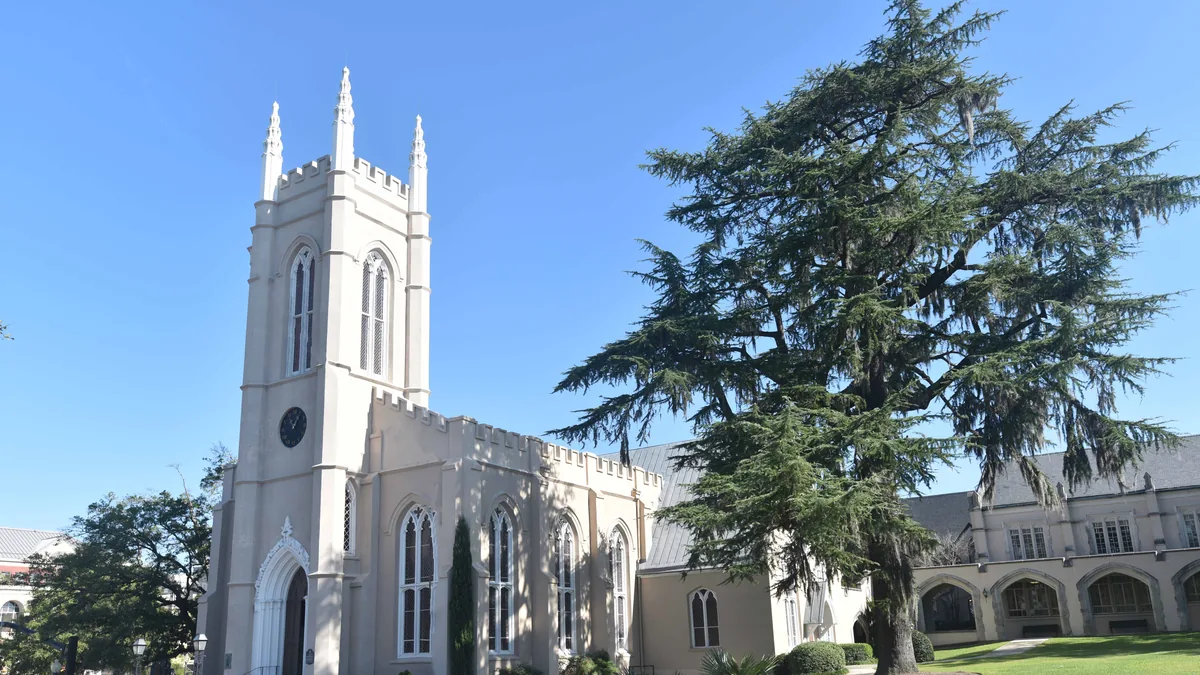
First, a Little History of St. James Graveyard
St. James Parish dates to 1729, making it part of Wilmington’s story from the colonial period onward. The parish’s own history says the oldest surviving gravestone in the churchyard was placed in 1757, before the first St. James church building was completed. The present church was completed in 1840 after the earlier building was demolished and some of its bricks were reused.
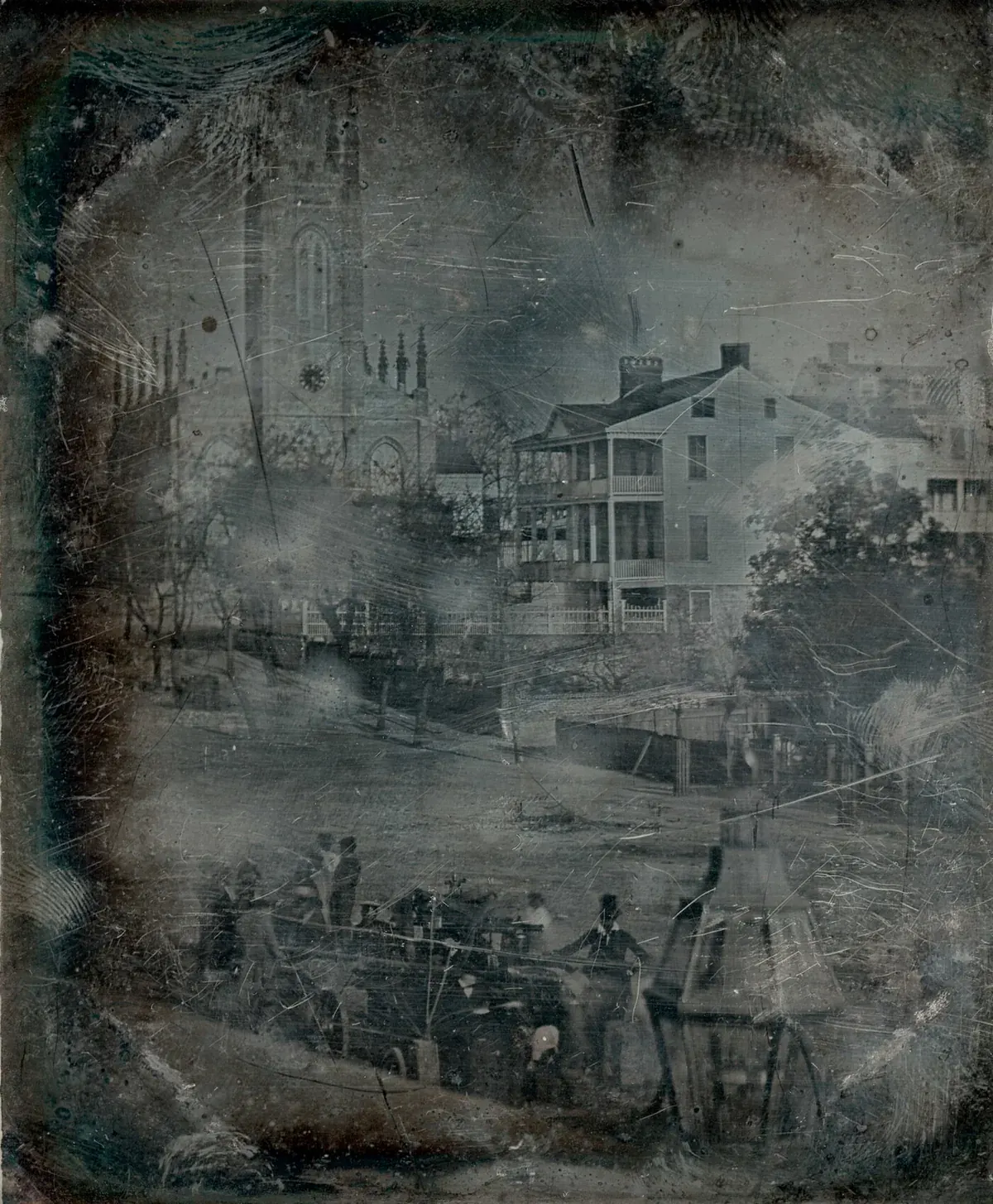 Photo credits
The church’s detailed official history of St. James Parish is useful because it puts the graveyard in context: this is not a purpose-built haunted attraction. It is a surviving piece of colonial Wilmington attached to an active Episcopal parish.
St. James’ own graveyard guide records 153 marked graves representing 175 people. They include mariners, merchants, physicians, children, Revolutionary-era figures and people whose lives were shaped by the hazards of an early port town. The latest surviving stone is dated 1849, although burials appear to have continued until Oakdale Cemetery opened in the 1850s.
Who Was Samuel Jocelyn?
Samuel R. Jocelyn is remembered today mainly because of the buried-alive story associated with St. James. A frequently cited early printed version appears in Alfred Moore Waddell’s A History of New Hanover County and the Lower Cape Fear Region, 1723–1800, published in 1909. Waddell presented the story as a local tradition and traced it to a lecture delivered by Col. James G. Burr in Wilmington in 1890.
In that account, Jocelyn was a promising young man and the son of a Wilmington lawyer. He and his friend Alexander Hostler had discussed whether a person might return after death and agreed that whichever of them died first would try to make his presence known to the other.
The account says Jocelyn died in an accident in 1810 and was buried in St. James churchyard. That point matters because later retellings sometimes add details—such as fever, a specific horse accident, icy water or a prolonged disappearance—that are not all present in the same historical telling. The safest way to understand the story is to separate its recurring core from details added in later versions.
Where the “Buried Alive” Story Begins
According to the tradition recorded by Waddell, Hostler believed he saw Jocelyn after the funeral. The apparition reportedly asked why he had been buried when he was not dead. After the experience was repeated, Hostler and another man, Lewis Toomer, were said to have opened the grave at night.
The dramatic ending is the part that gave the story its lasting power: the men allegedly found Jocelyn’s body in a different position from the one in which he had been placed, with the body described as lying face down.
That does not prove that Samuel Jocelyn was buried alive. The surviving account was written many decades after 1810 and reports testimony passed through other people. We have not found a contemporary medical report, burial record or other primary document demonstrating that Jocelyn regained consciousness inside the coffin. The responsible conclusion is that the buried-alive episode belongs to Wilmington folklore, even though the story itself has a long documented history.
What the Legend Does—and Does Not—Say
Modern versions often become more graphic. Some describe scratch marks inside the coffin, damaged fingertips, cries from the grave or a shadowy figure near the headstones. These details are common in ghost-story retellings, but they should not be presented as established facts unless a source can support them.
The older 1909 account is actually more restrained. Its central claim is that the body was found face down after Hostler’s visions prompted the grave to be reopened. That distinction is useful for anyone trying to understand how a local story changes as it is repeated for more than a century.
Wilmington still treats Jocelyn as part of its ghost-story tradition. The city’s tourism material continues to mention him in haunted-history features, which shows how deeply the tale has become attached to St. James and downtown Wilmington. That continuing popularity is evidence of the legend’s cultural life—not evidence that the paranormal parts happened exactly as told.
Was Yellow Fever Part of Samuel Jocelyn’s Story?
There is no good reason to make yellow fever part of Jocelyn’s death story. St. James Graveyard absolutely reflects Wilmington’s long history of contagious disease: the parish’s graveyard research identifies deaths from several fevers, and one marked burial is linked specifically to the 1844 yellow fever epidemic. But those records concern other people and later decades.
Connecting Jocelyn directly to yellow fever blurs two separate pieces of Wilmington history. The older published Jocelyn tradition describes an accidental death in 1810. That is the version we use here unless stronger contemporary evidence emerges.
Can You Visit St. James Cemetery?
Visitors interested in Wilmington history can see St. James Parish in the historic downtown area at 25 S. Third Street. The church remains an active place of worship, and the graveyard is a historic burial ground rather than a haunted-house attraction. If you visit, treat the grounds and markers as you would any cemetery: stay on appropriate paths, avoid touching fragile stones, keep noise down and respect church activities.
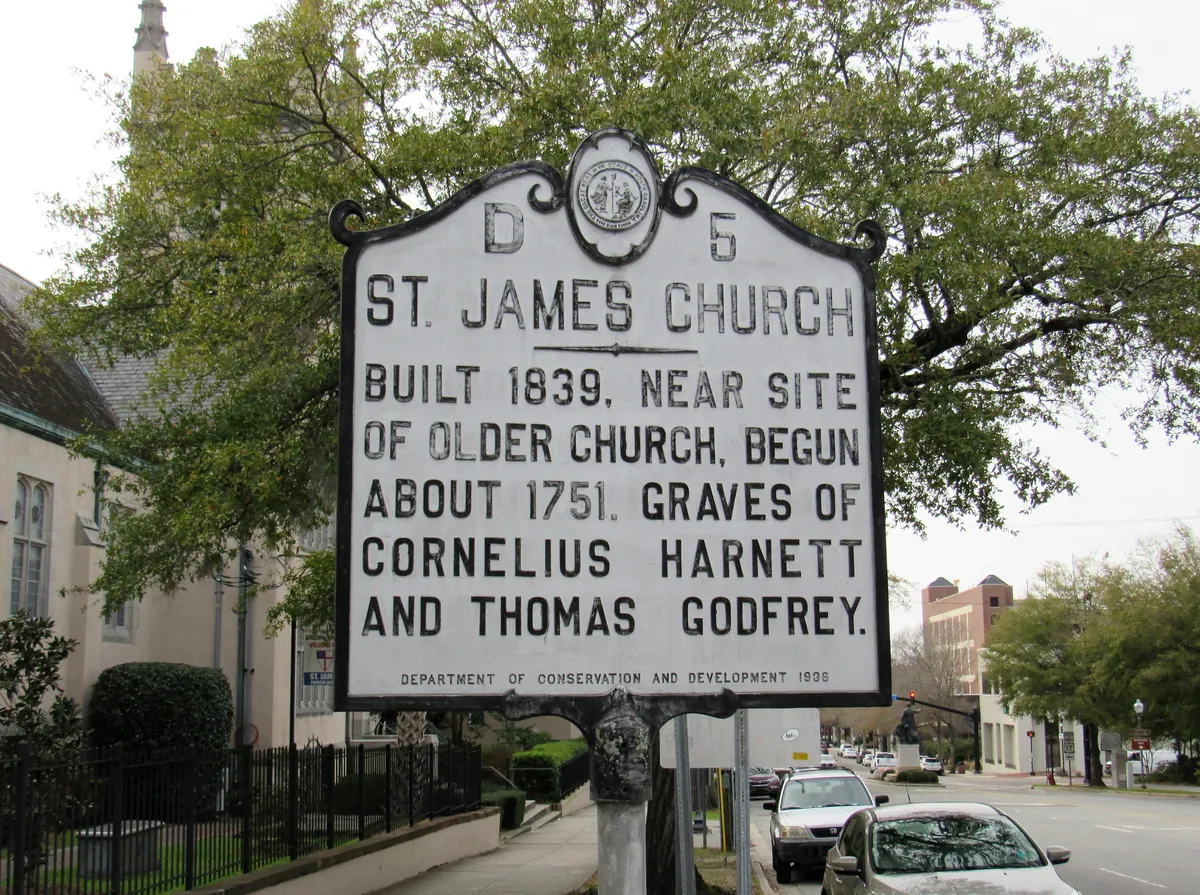 Photo credits
There is more to look for than the Jocelyn legend. The graveyard contains colonial-era markers and the grave of patriot Cornelius Harnett, along with memorials that tell stories about Wilmington’s maritime, political and religious past. The parish has also published a detailed guide for people who want to understand the individuals buried there rather than simply pass through looking for a ghost.
Why the Samuel Jocelyn Legend Still Matters
The best reason to know this story is not that it proves someone was buried alive. It shows how Wilmington’s documented past and oral tradition can occupy the same place without being the same thing.
St. James itself is historically significant without any paranormal claim. The Jocelyn story adds a second layer: a tradition recorded in print more than a century ago, retold by later writers and ghost tours, and still associated with the graveyard today. Reading the two layers separately makes the place more interesting, not less.
If you are exploring Wilmington’s haunted history, this is the useful distinction to carry with you: the graveyard is real, Samuel Jocelyn is part of an old Wilmington tradition, but the buried-alive and ghostly details remain folklore rather than verified history. For another nearby case where documented history and haunting stories overlap, see our guide to the Bellamy Mansion.
Sources
- St. James Parish — Our History (parish founding, church chronology and earliest grave marker).
- St. James Parish — Historic Graveyard guide (graveyard chronology, burials and documented local history).
- Alfred Moore Waddell, 1909 — “The Ghost of Samuel Jocelyn”, transcribed by NCGenWeb from A History of New Hanover County and the Lower Cape Fear Region, 1723–1800.
- University of North Carolina Wilmington — study of Wilmington ghost narratives (academic context for the Hostler–Jocelyn tale in local ghost literature).
Source check: September 6, 2026. Paranormal claims are presented as folklore or reported tradition, not as established fact.