
The Wilmington Coup & Massacre Historic Tour is not a ghost tour, and it is not designed as dark entertainment. It is a historian-led walk through the political violence of 1898: a coordinated white-supremacist campaign that ended with Black residents killed, a Black-owned newspaper destroyed, elected city officials forced from office, and Wilmington's government replaced by coup leaders.
If you are deciding whether this tour is right for you, the key question is not whether you enjoy haunted history. It is whether you want a serious introduction to one of the most consequential events in Wilmington's past. The published tour route moves through downtown locations connected with victims, perpetrators, speeches and political organizing, using the streets themselves to make the chronology easier to understand.
What happened in Wilmington in 1898?
By 1898, Wilmington had a large and economically active Black community. Black residents owned businesses, worked in skilled professions and public service, published newspapers, and held political influence. North Carolina politics had also been reshaped by cooperation between Republicans and Populists, often called the Fusion movement.
The backlash was organized, not spontaneous. North Carolina's NCpedia history of the Wilmington Coup, based on the state commission's research, describes a statewide white-supremacy campaign that used newspaper propaganda, inflammatory speeches and intimidation to regain political control. Local business and political leaders in Wilmington also planned how to remove the city's existing government.
One focal point was The Daily Record, a Black-owned newspaper edited by Alexander Manly. An editorial Manly published in August 1898 was repeatedly reprinted and weaponized by white-supremacist campaigners. Manly fled Wilmington before the violence reached his newspaper office.
On the morning of November 10, 1898, roughly 500 armed white men gathered at the Wilmington Light Infantry armory. Led by former Confederate officer and former congressman Alfred Moore Waddell, they marched to the Daily Record office and destroyed it. The crowd grew as violence spread through the city.
The number of Black residents killed is still uncertain. The North Carolina Department of Natural and Cultural Resources notes estimates ranging from the coroner's count of 14 to much higher reports; the state's 2006 commission concluded that the number may have been as high as 60. All reported fatalities were Black.
Why historians call it a coup, not simply a “race riot”
The older label “Wilmington race riot” suggests a spontaneous clash between two groups. That wording hides the political outcome that makes November 10 different.
After the violence began, Wilmington's white Republican mayor, Silas P. Wright, and members of the board of aldermen were pressured into resigning. Replacement officials were selected, and Waddell became mayor. In other words, armed political violence was followed by the removal of a legally constituted local government and its replacement by the movement that had organized against it.
That is why state historical markers, the City of Wilmington, the Wilmington 1898 Museum and modern scholarship use terms such as massacre, insurrection and coup d'état. The City of Wilmington describes the event as the overthrow of the city's legally elected biracial government and commemorates it at 1898 Memorial Park.
What the walking tour actually adds
You can read the history online or in a book. The reason to take a walking tour is different: geography makes the sequence of events easier to grasp.
The current tour description says guests move between sites associated with the 1898 coup and massacre, including places tied to victims and perpetrators as well as locations connected with major speeches. The route is therefore less about checking off famous attractions and more about seeing how political organizing, newspaper offices, homes, meeting places and government spaces were connected within a relatively compact city.
The operator also describes the tour as deliberately scholarly and non-sensational. That is appropriate for the subject. A good interpretation of 1898 should not turn racial violence into a dramatic “dark history” spectacle; it should explain the people, institutions and decisions that made the violence possible.
The people and ideas you should understand before the tour
Alexander Manly and The Daily Record
Manly was the editor of Wilmington's Black-owned Daily Record. His newspaper matters because it represented more than one controversial editorial: it was part of a Black civic and business community with its own public voice. The mob's destruction of the paper was both an attack on Manly and an attack on Black political power and communication.
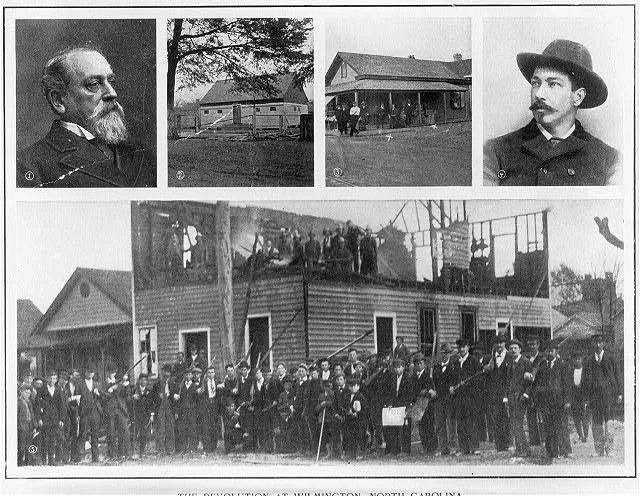 Photo credits
Alfred Moore Waddell
Waddell was a former Confederate officer and U.S. congressman who became one of the most visible leaders of Wilmington's white-supremacist movement. Before the election he gave an inflammatory speech at Thalian Hall. On November 10 he led the march on the Daily Record office and later became mayor after elected officials were forced out.
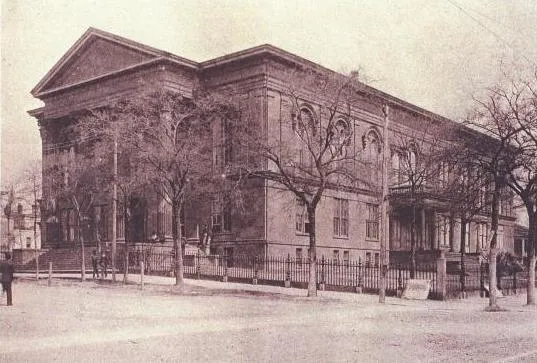 Photo credits
The Black residents who resisted, fled or were driven out
The story should not be reduced to Manly and Waddell. Black Wilmingtonians defended families and neighborhoods, hid from armed men, fled the city, lost businesses and political power, and lived with the consequences for decades. J. Allen Kirk, pastor of Central Baptist Church, later produced an important eyewitness account of the violence. The state historical marker program identifies his written statement as a key contemporary source.
What changed after November 10
The coup did not end when the shooting stopped. Prominent Black residents and white Republicans were forced or pressured out of Wilmington. Black political influence collapsed. The state legislature soon adopted measures that restricted Black voting and helped establish the Jim Crow system that would shape North Carolina for generations.
The demographic impact was also profound. Wilmington had been a majority-Black city before the coup. Violence, expulsion and migration altered that balance and weakened a Black business and professional community that had taken decades to build.
This long aftermath is one reason the tour is more useful when it explains causes and consequences rather than treating November 10 as a single violent day.
How reliable is the history?
This is one of the strongest reasons to choose this experience over a generic “dark history” walk. The events have been studied extensively by historians and by an official state commission created to document what happened and its consequences.
Some details remain disputed—especially the exact death toll—but the central facts are not: a white-supremacist political campaign preceded the violence; the Daily Record was destroyed; Black residents were killed; elected city officials were forced out; and the coup leaders took control of Wilmington's government.
For primary-source context, the Library of Congress preserves newspaper coverage published immediately after the violence. Reading those accounts today is also a lesson in source criticism: some contemporary papers framed the killings as a Black-instigated “riot,” language later historical research has shown to be deeply misleading.
Practical details before you go
| Tour feature | What to expect |
|---|---|
| Scheduled duration | About 1 hour 15 minutes. Leave a little buffer afterward rather than planning a tight connection. |
| Meeting point | Outside 125 Market Street in downtown Wilmington. The tour currently ends back at the same point. |
| Walking | Downtown sidewalks and street crossings with periods of standing while the guide explains the history. Comfortable shoes are sensible. |
| Accessibility | The current listing marks the tour and surfaces as wheelchair accessible. Real-world curb, traffic and sidewalk conditions can still matter, so review our Wilmington tour accessibility guide if mobility is a deciding factor. |
| Content | Racial violence, killings, intimidation and political extremism. This is serious material rather than a scare-based experience. |
| Group size | The current listing allows groups up to 25 travelers. |
Because the subject is heavy, I would not choose this tour simply because you want “something spooky” to do after dinner. Older teens and adults interested in U.S. history, Reconstruction, civil rights, journalism or political violence are much more likely to appreciate it. For a lighter historian-led experience, the History & Architecture Walking Tour is a better fit. For crime stories from different periods, see the True Crime Tour.
Should you take the Wilmington Coup & Massacre Tour?
Yes, if your main goal is to understand Wilmington rather than simply see it. The event changed the city's government, Black community and political future, and it influenced the broader move toward Black disenfranchisement and Jim Crow in North Carolina.
The tour is especially worthwhile for visitors who have heard the phrase “1898 Wilmington massacre” but do not yet understand how propaganda, elections, economic power, racial ideology and organized violence fit together. Walking the streets where the campaign and coup unfolded can make that history more concrete than reading a short plaque or summary.
Skip it if you want paranormal stories, theatrical scares, or a casual sightseeing walk. The subject deserves attention, and the experience works best when visitors are prepared to listen to difficult history rather than treat it as entertainment.
Continue the history after the tour
If you want to keep learning, the most useful next stop is 1898 Memorial Park at 1018 N. 3rd Street. The City of Wilmington dedicated the memorial in 2008 to commemorate the people affected by the coup and massacre.
The developing Wilmington 1898 Museum is another useful resource, while the North Carolina Department of Natural and Cultural Resources provides the state commission's research and timeline online.
Sources & further reading
This article separates current tour logistics from the underlying history. Historical claims were checked against state, city, museum and archival sources. Tour logistics were reviewed against current public listings on September 6, 2026.
- North Carolina Department of Natural and Cultural Resources — 1898 Wilmington Coup and Commission resources
- NCpedia — The Wilmington Coup, by LeRae Umfleet
- National Endowment for the Humanities — Wilmington, 1898: The Unsuppressed History of a Massacre
- City of Wilmington — 1898 Memorial Park
- Wilmington 1898 Museum — history of the massacre and coup
- Library of Congress, Chronicling America — contemporary newspaper coverage, November 11, 1898