
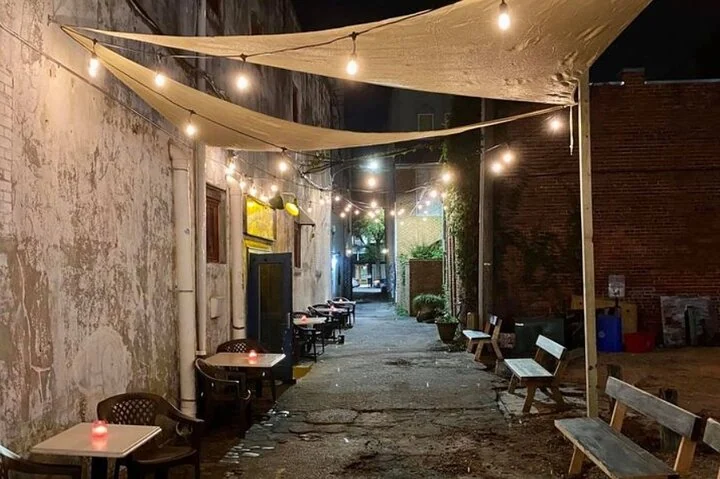
If ghost stories are not really your thing, Wilmington still has a darker walking tour worth considering. The True Crime Tour of Wilmington is a roughly one-hour guided walk through downtown built around documented crimes, court cases, investigations, and other unsettling episodes from the city’s past.
The key difference is simple: this is not a paranormal tour. Current tour descriptions explicitly frame the stories as real, verifiable historical events. The public listing mentions murders in dark alleys, an old city jail, a murder case that developed into a spy controversy, arson, and stories spanning well over a century. The operator does not publish a fixed case-by-case itinerary, so this guide does not pretend that every story or stop is guaranteed on every departure.
What This Tour Is Actually Like
This is best understood as a history walk built around criminal cases, rather than a crime-themed attraction. You move through downtown Wilmington with a guide, stop near locations connected with the stories, and hear how individual cases unfolded. There are no advertised actors, jump scares, paranormal equipment, or staged scenes.
The current public itinerary is deliberately broad. It specifically mentions Market Street alleys and the old city jail, while the tour description reaches from nineteenth-century murders to twentieth-century espionage and arson. That flexibility is important: a live guide may change the selection or emphasis, and the operator does not promise a published checklist of named cases.
That is also why we would be cautious with any article that claims “you will hear case X, Y and Z” unless those cases are confirmed for a specific departure. The more useful expectation is that you are getting a sampler of Wilmington crime history across different eras.
Why Wilmington Has Enough Real Crime History for a Tour
Wilmington’s history is unusually layered for a compact downtown. It has been a colonial port, a major nineteenth-century commercial center, a Civil War city, a World War II boomtown, and the setting for several nationally important legal and civil-rights cases. A true-crime walk can therefore move between very different kinds of stories without leaving the historic core.
Crime records reach back well into the 1800s
The tour advertises murders dating to Wilmington’s turbulent 1840s, and the surviving court record confirms that serious homicide cases from the city were reaching the North Carolina Supreme Court at that time. One documented example is State v. Broughton (1846), which arose from the killing of Wilmington shopkeeper Frank De Silva. The case became legally notable because of testimony Broughton had given before the grand jury while investigators were still trying to identify the killer.
That does not mean this is a guaranteed story on the tour; the current tour listing does not name its 1840s case. It does show, however, that the advertised period is grounded in surviving records rather than generic “old-time crime” language.
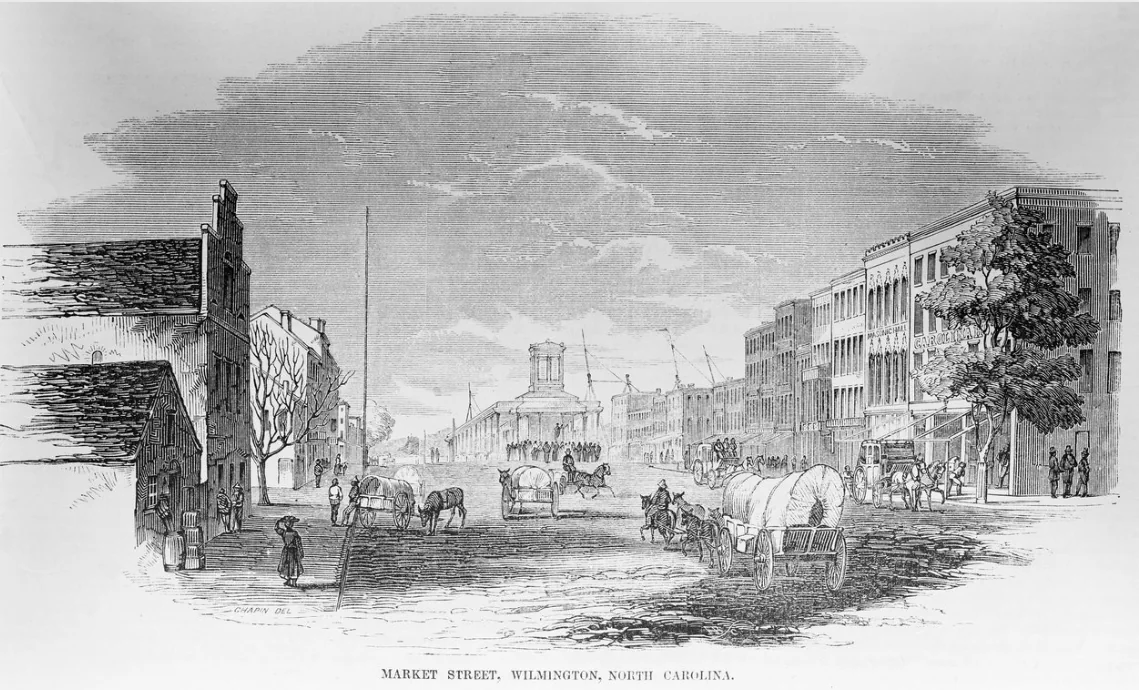 Photo credits
Wilmington’s crime history is not always a simple whodunit
Some of the city’s darkest cases are also about policing, prosecution, race, and the reliability of the justice system. The best-known example is the Wilmington Ten. In 1971, Mike’s Grocery was firebombed during a period of racial violence. Ten people were later convicted in connection with the case, but key testimony was discredited and a federal appeals court overturned the convictions in 1980. North Carolina later pardoned the group.
The North Carolina Department of Natural and Cultural Resources summarizes both the firebombing and the problems with the prosecution. Again, we are not claiming the Wilmington Ten is necessarily one of the tour’s regular stories. It is included here because it illustrates what “true crime” in Wilmington can mean: sometimes the most important question is not simply who committed a crime, but whether the legal system reached a reliable result.
The record extends into the modern era
Traveler reports indicate that some versions of the tour have included cases reaching as late as 2000. Wilmington’s documented record supports that kind of time range. For example, a 2002 WECT report on unsolved homicides noted the January 1, 2000 shooting death of William Smith at his home in the 600 block of Market Street. The case was still unsolved when the report was published.
We would not assume that this is the specific modern case used on the tour, because the operator does not publish the full case list. The point is that this walk is not limited to Victorian-era murders. It can connect the historic district with much more recent crime history as well.
How It Differs from a Wilmington Ghost Tour
The biggest difference is evidence. A ghost walk can responsibly tell local legends while acknowledging that paranormal claims are unverified. This tour takes the opposite approach: the stories are supposed to begin with documented events.
If you are skeptical of supernatural stories but still like dark history, this is probably the cleaner fit. You still get the nighttime streets and old downtown setting, but the tension comes from real people, court records, investigations, and consequences rather than apparitions.
If what you actually want is ghost lore, compare it with our Wraiths & Wicked Whispers guide or Ghost Walk of Old Wilmington guide. Those experiences are built around supernatural storytelling rather than crime history.
True Crime Tour vs. the 1898 Coup & Massacre Tour
These two Wilmington tours can sound similar because both deal with difficult history, but they serve different interests.
The True Crime Tour samples multiple crimes and mysteries from different periods. The 1898 Wilmington Coup & Massacre Tour is a deeper, more focused history tour about one major event and its political context.
If you want variety and unusual cases, choose true crime. If you want to understand one of the most consequential events in Wilmington and North Carolina history in depth, the 1898 tour is the more focused choice.
How Graphic or Disturbing Is It?
The tour is not marketed as a gore experience, but the subject matter is still real murder, arson, violence, and criminal investigation. That matters more than an age number on a booking page.
Adults and older teens who already enjoy true-crime documentaries or history podcasts are the most obvious audience. Families with younger children should consider maturity and sensitivity rather than assuming a one-hour walking tour is automatically child-friendly. A case can be described without graphic detail and still be upsetting because the victims were real people.
Walking, Accessibility, and Practical Details
The current listing places the meeting point at 125 Market Street, outside Slice of Life, and says the tour returns to the same point. That loop format is convenient if you are parking downtown because you do not have to plan a separate walk back to your car after the tour.
Current third-party accessibility information marks the experience as wheelchair and stroller accessible and allows service animals. Still, downtown sidewalks, temporary construction, weather, and the exact route can change. If mobility is a deciding factor, check our Wilmington walking-tour accessibility guide and confirm the details for your date.
The experience is outdoors and current listings say it depends on suitable weather. Bottled water is not listed as included, so bringing your own is sensible in warmer months. For the easiest arrival, see our downtown tour parking guide.
Who Is This Tour Best For?
Choose the True Crime Tour if you: prefer documented history to paranormal claims; enjoy criminal cases, courtroom stories, investigations, or social history; want a short downtown activity; or are traveling with someone who wants “dark history” without a traditional ghost tour.
You may prefer something else if you: want jump scares or haunted-house entertainment; want to enter historic buildings; want a single event explored in depth; or would rather avoid stories involving murder and real victims.
Is the True Crime Tour of Wilmington Worth It?
For the right visitor, yes—mainly because it fills a niche the ghost tours do not. Wilmington already has plenty of spooky storytelling. This tour is more interesting when you approach it as a compact lesson in how crime, courts, and public memory changed across the city’s history.
The biggest strength is the historian-led, non-paranormal format. The biggest limitation is that the published itinerary is vague, so you should not book expecting one specific famous case unless your confirmation says otherwise. If you are comfortable with that element of surprise and enjoy real history more than ghost lore, it is one of the more distinct evening walking-tour options downtown.
Sources & Research Notes
- CourtListener — North Carolina Reports, Vol. 29 (includes State v. Broughton, 1846)
- North Carolina DNCR — The Wilmington 10 and Firebombing of Mike’s Grocery
- WECT — Wilmington unsolved murders report, 2002
Current tour duration, meeting point, return point, accessibility notes, and public description were cross-checked against public tour listings on September 6, 2026. The operator does not publish a complete fixed case list. Historical cases included above are used to verify the eras and types of crime documented in Wilmington; they are not presented as guaranteed tour stops unless the public tour description specifically says so. This is an independent research guide and does not claim firsthand participation in the tour.