
Oakdale Cemetery is one of those places where Wilmington’s history feels unusually close.
Its winding roads pass beneath old trees and between Victorian monuments, family plots, military graves and sections connected to some of the darkest chapters in the city’s past. Civil War officers rest here. Yellow fever victims were buried here. A Confederate spy, the architect of the Lincoln Memorial and even a railroad conductor connected to one of North Carolina’s most famous ghost legends can all be found within the cemetery grounds.
That history has naturally produced stories about ghosts.
But Oakdale is more interesting when the legends are not separated from the people and events that came first.
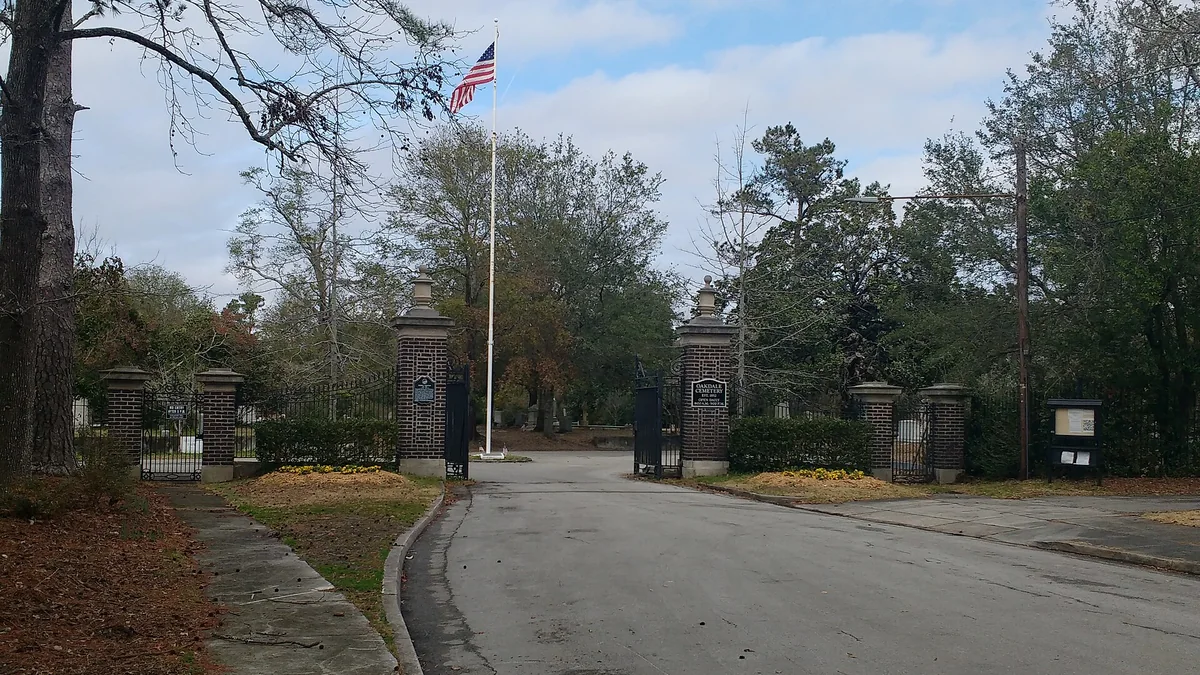
What Is Oakdale Cemetery?
Oakdale Cemetery was established in 1852, making it North Carolina’s first rural cemetery.
At the time, Wilmington’s older church burial grounds were becoming crowded. The rural cemetery movement offered a different idea: large landscaped cemeteries outside the busiest parts of town, designed with curving roads, trees, gardens and open space.
Oakdale followed that model. Its earliest sections were laid out in a picturesque Victorian style, giving families space for elaborate monuments and private plots rather than tightly packed churchyard graves.
The cemetery may have been established in 1852, but its first burial came a few years later.
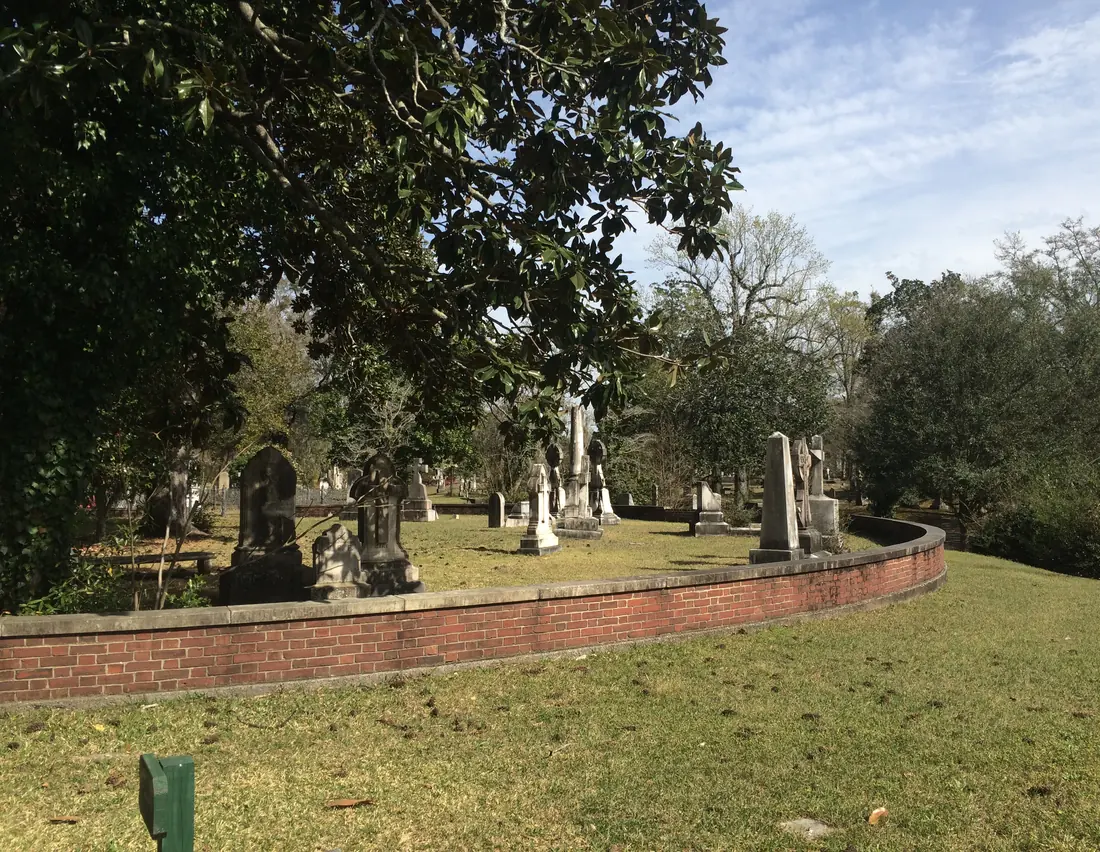 Photo credits
The First Burial: Annie DeRosset
The first person buried at Oakdale was Annie DeRosset, a six-year-old girl who died in February 1855.
She was the daughter of Dr. Armand John DeRosset, the first president of the cemetery company.
Her grave quietly marks the beginning of a place that would eventually become the final resting place for thousands of Wilmington residents.
Over time, Oakdale grew into something larger than a cemetery. It became a record of the city itself. Its monuments preserve family names, epidemics, wars, fires, maritime disasters and personal tragedies that shaped Wilmington across generations.
The Yellow Fever Graves of 1862
One of Oakdale’s darkest chapters came during the yellow fever epidemic of 1862.
The disease spread through Wilmington during the Civil War and caused hundreds of deaths in only a few months. Many victims were buried in Oakdale’s public grounds.
Unlike the elaborate family monuments found elsewhere in the cemetery, many yellow fever victims were buried without individual markers. Today, that area represents one of the largest concentrations of epidemic burials in Wilmington.
It is important not to turn that history into a ghost story simply because it happened in a cemetery. The epidemic was real. Families lost children, parents and neighbors while the city was already under the strain of war.
That documented tragedy is part of what gives Oakdale its atmosphere today.
The Confederate Mound and Fort Fisher Dead
Oakdale is also closely connected to the Civil War.
A large burial area known as the Confederate Mound contains the remains of hundreds of unidentified Confederate soldiers. Cemetery records identify 367 unknown Confederate soldiers buried there.
Some of the men buried in Oakdale died during the final fighting around Fort Fisher, the massive Confederate fortification south of Wilmington that protected access to the Cape Fear River.
That creates a direct connection between Oakdale and one of the region’s most important battlefields. Fort Fisher fell in January 1865 after a major Union assault, and soldiers killed during the battle were among those eventually buried in Wilmington.
If you have already explored the history behind Fort Fisher’s ghost stories, Oakdale is where part of that story continues.
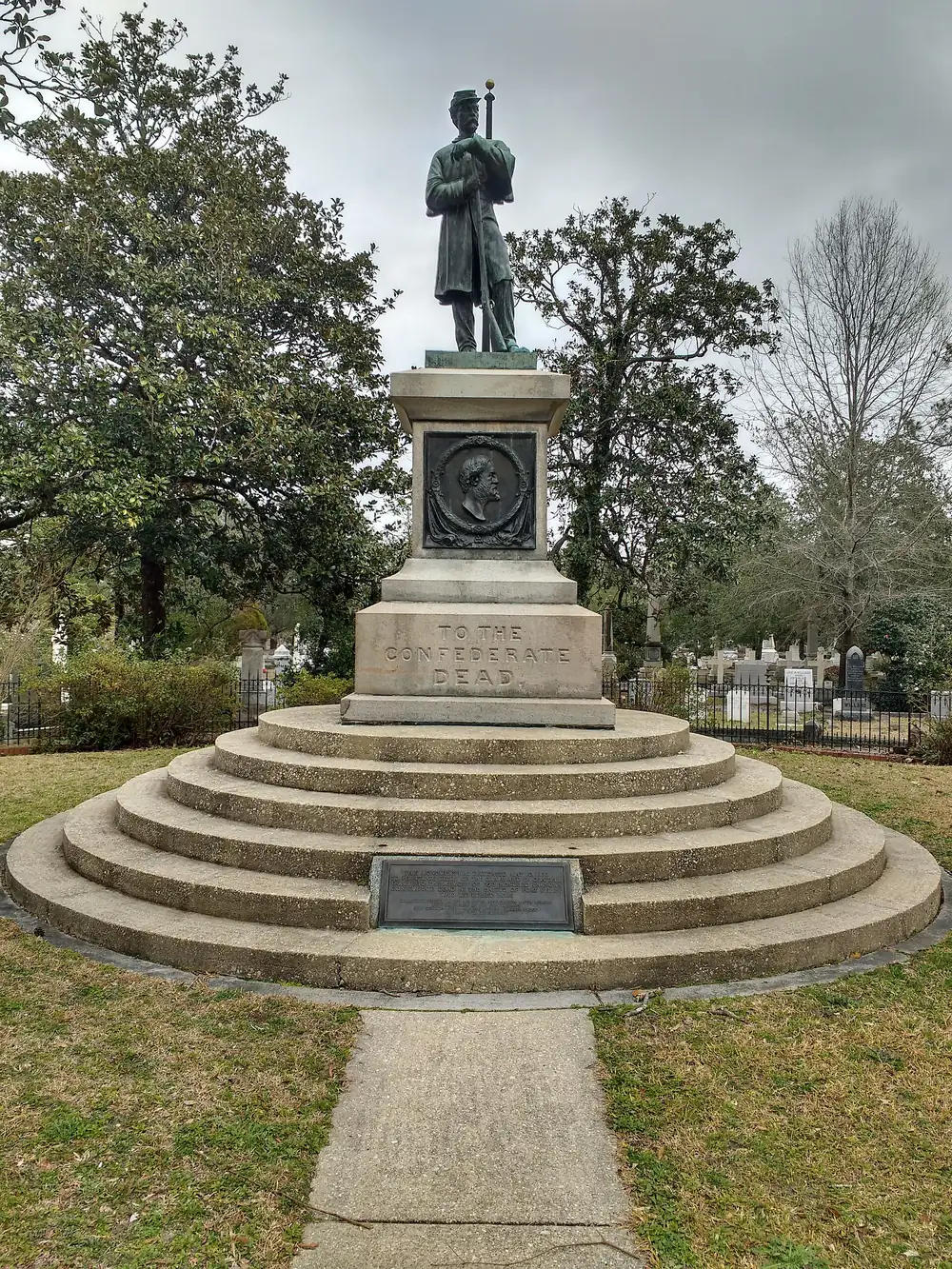 Photo credits
General William H. C. Whiting
One of the best-known Fort Fisher figures buried at Oakdale is Major General William H. C. Whiting.
Whiting helped oversee the defenses protecting Wilmington and fought personally during the final battle at Fort Fisher in January 1865. He was wounded and captured when the fort fell.
A common simplification in ghost stories says Whiting died at Fort Fisher, but that is not what happened. He survived the battle, was taken north as a prisoner and died in a Union hospital in March 1865.
His remains were later brought back to Wilmington and buried at Oakdale.
Whiting eventually became the central figure in one of Fort Fisher’s most persistent ghost legends, with stories describing a Confederate officer still appearing around the old battlefield.
Whether anyone has truly seen Whiting’s ghost is impossible to prove. What is certain is that the real man rests here in Oakdale.
Rose O’Neal Greenhow
Another famous Civil War figure buried in Oakdale is Rose O’Neal Greenhow.
Greenhow was a well-known Confederate spy who traveled to Europe during the war and later attempted to return to the Confederacy aboard the blockade runner Condor.
In 1864, the ship ran aground near Fort Fisher. Fearing capture, Greenhow tried to reach shore in a small boat. The boat overturned in rough water, and she drowned.
She was brought to Wilmington and buried at Oakdale with military honors.
Later ghost stories sometimes claim that Greenhow’s spirit remains near Fort Fisher or along the coast where she died. Those reports belong to folklore. Her death at sea and burial at Oakdale belong to the historical record.
Charles Baldwin and the Maco Light Connection
Oakdale also contains the grave of a man connected to a completely different North Carolina legend.
Charles Baldwin was a railroad conductor who died after a train accident west of Wilmington in January 1856. The documented accident involved a nighttime collision, serious head injuries and a missing warning light.
Decades later, the same area became famous for the Maco Light, a mysterious lantern-like glow said to move along the railroad tracks.
Popular legend transformed the victim into a man named Joe Baldwin, who was supposedly decapitated while trying to warn an approaching train. Historical records point instead toward Charles Baldwin as the likely real event behind at least part of the story.
You can read the full history in our guide to the Maco Light near Wilmington.
The fact that Baldwin is buried in Oakdale makes the cemetery an unexpected connection between Wilmington history and one of North Carolina’s best-known ghost legends.
Nance Martin and the Barrel of Rum
Not every unusual Oakdale story involves war or ghosts.
One of the cemetery’s strangest documented stories belongs to Nancy “Nance” Martin.
Martin died in 1857 while traveling near Cuba. Transporting a body over long distances in the nineteenth century was difficult, especially in warm climates, so her remains were placed in a large cask filled with rum for the journey back to Wilmington.
She was eventually buried in Oakdale.
The story becomes even sadder when her family history is considered. A few months later, her brother was lost at sea while traveling toward Cuba. His body was never recovered.
At the family plot, his memorial simply records that he was lost at sea.
The story sounds almost like something created for a gothic novel, but its foundation is historical rather than paranormal.
Captain Ellerbrock and Boss
Another Oakdale grave tells a very different kind of story.
In April 1880, a major fire broke out near Front and Dock Streets in downtown Wilmington. Riverboat captain William Ellerbrock became involved in efforts to fight the fire.
His dog, Boss, followed him into the burning building. Both died.
Boss was placed inside Ellerbrock’s coffin and buried with him at Oakdale.
On the monument, a carving of a dog is accompanied by the words “Faithful Unto Death.”
Among all the military graves and elaborate Victorian monuments in Oakdale, the Ellerbrock memorial is one of the cemetery’s most personal stories. It is not frightening. It is simply memorable.
Henry Bacon and Other Famous Graves
Oakdale is also the resting place of Henry Bacon, the architect best known for designing the Lincoln Memorial in Washington, D.C.
Bacon died in 1924. His own grave marker was reportedly based on architectural drawings found among his papers after his death.
The cemetery contains many other prominent Wilmington residents, politicians, military figures, business owners, physicians and members of families whose names still appear throughout the city.
That is why Oakdale works almost like an outdoor history museum. You do not have to know every name before visiting. Even the architecture of the monuments tells you something about the people and periods represented there.
Is Oakdale Cemetery Haunted?
Oakdale is sometimes included in lists of haunted places in Wilmington, but the evidence for a strong, specific paranormal tradition is thinner than it is at places such as Fort Fisher, Thalian Hall or some of Wilmington’s historic homes.
Visitors have occasionally reported unusual experiences. Stories include strange feelings near certain family plots, unexplained shapes in photographs and sightings of figures that seemed to disappear.
One recurring story describes a young girl appearing among the graves before suddenly vanishing.
These reports are interesting as local folklore, but they should not be presented as established historical facts.
A cemetery does not need to be haunted simply because it is old.
Why Cemeteries Produce Ghost Stories
Oakdale has nearly everything that encourages ghost stories to grow.
It is old. It contains thousands of graves. Its monuments are surrounded by trees, shadows and quiet roads. Many of the people buried there died during wars, epidemics, fires, accidents and shipwrecks.
Visitors already know those stories before they enter, and that history can influence how a place feels. A movement in the trees may seem more significant. An unexplained sound may attract more attention. A distant figure between monuments may become something memorable because of the setting around it.
None of that proves a paranormal explanation. But it does explain why cemeteries such as Oakdale remain powerful places for local folklore.
Visiting Oakdale Cemetery Today
Oakdale is still an active cemetery and should be treated as one.
Visitors are welcome to explore during public hours, but the graves are not attractions in the same way as museum exhibits. Families continue to visit loved ones here.
The cemetery also offers organized historical tours during parts of the year, including special evening and flashlight tours. Those tours are a much better way to experience Oakdale after dark than attempting to enter outside permitted hours.
If you visit on your own, take time to explore respectfully. Look at the changing styles of monuments. Read the names. Notice the military sections and older family plots.
And remember that many of the most interesting stories here are true without needing a supernatural ending.
Why Oakdale Matters to Wilmington
Oakdale Cemetery is more than a collection of graves.
It connects several different chapters of Wilmington history in one place.
Yellow fever victims lie near Civil War dead. General Whiting connects Oakdale to Fort Fisher. Rose Greenhow connects it to blockade running and wartime Wilmington. Charles Baldwin connects it to the Maco Light legend. Henry Bacon connects Wilmington to one of the most recognizable monuments in Washington.
Nance Martin and Captain Ellerbrock preserve smaller stories that might otherwise have disappeared.
That is what makes Oakdale worth exploring.
The ghost stories are part of the cemetery’s folklore, but they are not the reason Oakdale is important. Its real power comes from the people buried there and the history their graves preserve.
For more stories where Wilmington history and folklore overlap, explore our guides to Wilmington NC ghost stories and local legends, Fort Fisher’s haunted history, and the Maco Light legend.
Sources & further reading
Sources used to verify the historical and practical details in this guide:
- Oakdale Cemetery — Official Site: current visitor information and overview of the cemetery.
- Oakdale Cemetery — History: official account of its 1852 charter, first burial, yellow-fever section and development as a rural cemetery.
- NC DNCR — Oakdale Cemetery Historical Marker: state historical context and notable burials associated with Wilmington and North Carolina history.
- NC DNCR — Origins of the Maco Light Legend: official source for conductor Charles Baldwin and the rail accident connected to one of the cemetery’s best-known legends.
Sources checked September 6, 2026. Historical records are treated separately from local folklore and reported paranormal experiences.