
Fort Fisher sits south of Wilmington at Kure Beach, but it has long been part of the wider Cape Fear region's haunted reputation.
That is not surprising. Few places near Wilmington combine so much documented violence, loss and local folklore in one setting. The earthworks defended the last major Confederate port on the Atlantic coast, endured two major attacks and saw one of the Civil War's bloodiest late battles.
Does that prove Fort Fisher is haunted? No. But it does explain why ghost stories took hold there so easily.
The more useful question is not whether every reported sighting is supernatural. It is how much of Fort Fisher's haunted image grows from real history, and where legend begins.
Why Fort Fisher Matters Near Wilmington
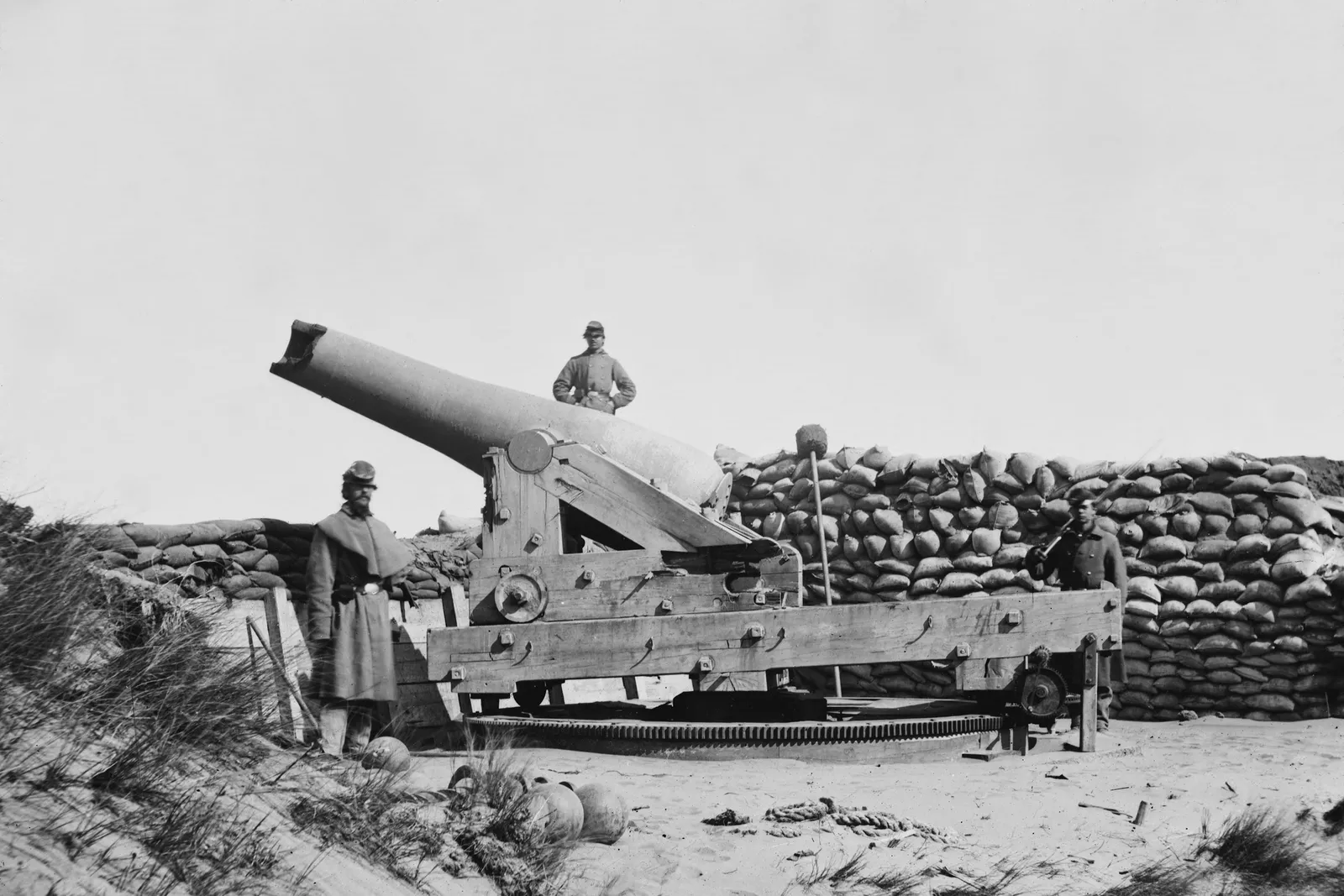
Fort Fisher was built at Federal Point to protect the New Inlet entrance to the Cape Fear River. By late 1864, Wilmington had become the Confederacy's last major open seaport on the Atlantic. Supplies arriving on blockade runners could still be unloaded and sent inland by rail.
That made Fort Fisher strategically vital. When the fort fell in January 1865, Wilmington's wartime lifeline was effectively broken. The site is important not only because of the battle itself, but because its fall helped close one of the Confederacy's final links to the outside world.
Its darker history also includes the labor behind its construction. Fort Fisher was built not just by soldiers, but with the work of hundreds of African Americans, both enslaved and free, whose labor helped shape the earthworks that survive today.
The Battles of Fort Fisher
There were two major Union attempts against Fort Fisher. The first, in December 1864, ended in failure when Federal forces withdrew without capturing the fort. The second, in January 1865, was much larger and more determined.
From January 13 to 15, Union naval fire pounded the fort while ground forces closed in. On January 15, after hours of brutal fighting, Fort Fisher finally fell. The Confederate garrison suffered heavily, and many of the survivors became prisoners.
Even without ghost stories, Fort Fisher would remain one of the most emotionally charged historic sites near Wilmington. The battlefield was a place of close combat, confusion, shock and mass death, and that reality sits beneath every later haunted tale.
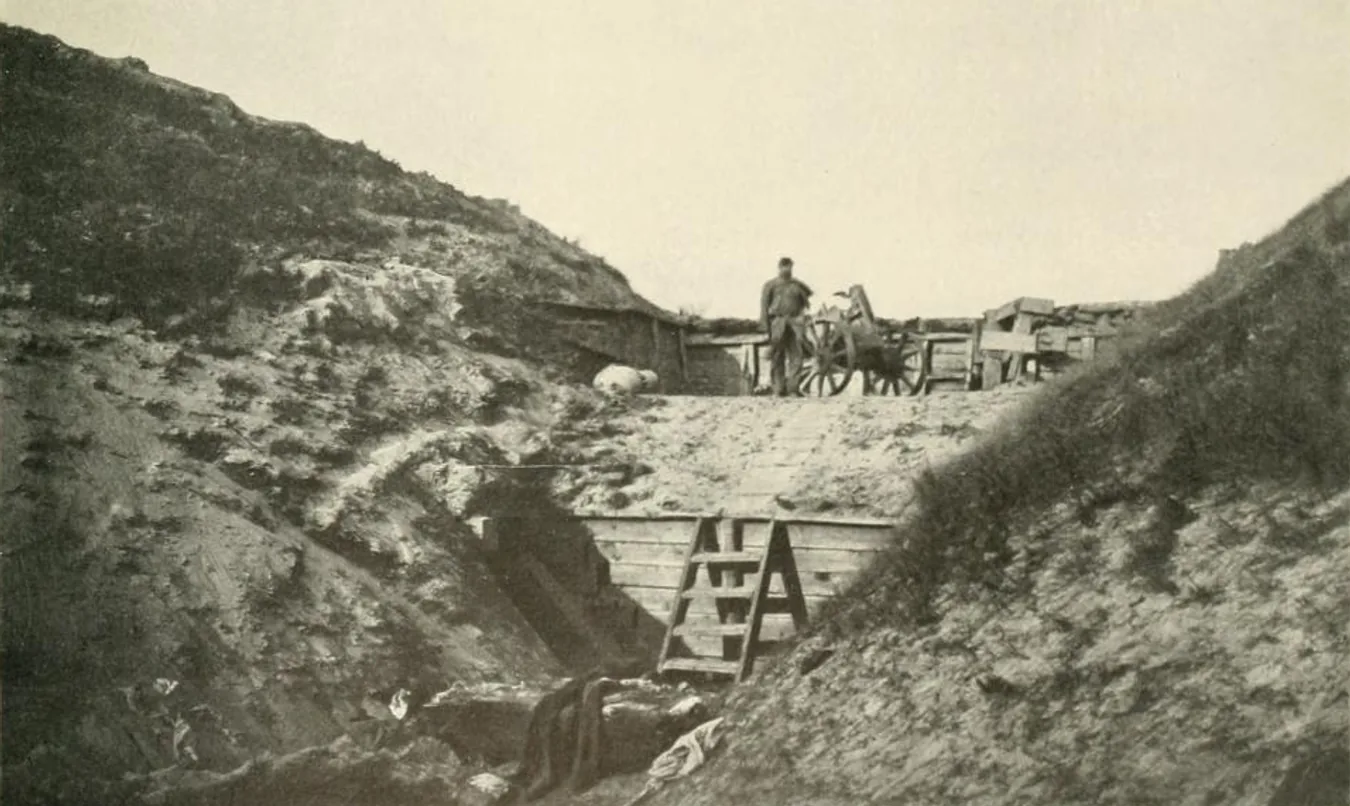 Photo credits
The Morning After Was Also Deadly
One of the grimmest facts about Fort Fisher is that the killing did not end when the battle ended.
On the morning of January 16, 1865, the fort's main powder magazine exploded. At least 200 men from both sides were killed in the blast. For a site that already carried the trauma of a major battle, the catastrophe made the aftermath even darker.
In later retellings, the explosion sometimes sounds like sabotage or a secret act of revenge. Historical investigation points instead toward negligence and careless handling of lights and gunfire around dangerous stored powder. The truth is less theatrical than folklore, but no less tragic.
General Whiting and the Main Fort Fisher Ghost Story
The figure most often linked to Fort Fisher's haunted reputation is Major General William H. C. Whiting.
Whiting was deeply connected to the Cape Fear defenses and personally entered the fighting during the final battle. He was badly wounded on January 15 and helped surrender the fort to Union General Alfred Terry.
Later ghost stories often imply that Whiting died at Fort Fisher itself, but that is not quite accurate. He was taken north as a prisoner and died in March 1865 in a Union hospital. His remains were eventually reburied in Oakdale Cemetery in Wilmington.
That difference matters because it shows how easily history can be simplified once a ghost story takes over. Whiting's role in the battle is historical fact. Reports that his spirit still walks Fort Fisher belong to regional folklore.
The General's Ghost
Still, the Whiting story is not some brand-new internet invention. It has been part of North Carolina ghost lore for years. In local tradition, visitors and staff have reported seeing a gray-clad figure on the earthworks or sensing the presence of an officer still tied to the battlefield.
That legend works because it fits the place. A wounded general, a desperate defense and a site that saw large-scale death all create the kind of setting where people expect memory to linger.
Expectation alone does not prove a haunting. But it helps explain why the idea of Whiting's ghost became one of Fort Fisher's most durable stories.
Other Reported Ghost Stories at Fort Fisher
General Whiting is not the only figure tied to Fort Fisher's haunted reputation. Over the years, visitors have described reported footsteps, shadowy figures, the feeling of being watched and distant battle sounds that seem out of place in the modern landscape.
Some local lore also mentions a lone Confederate sentry who appears to still be guarding the fort, while other stories speak of ghostly cannon fire or activity around the earthworks after dark.
These reports should be treated for what they are: stories and personal experiences. They are part of Fort Fisher's folklore, not part of the military record. In a historic battlefield setting, unusual sounds and strong emotional reactions can easily become attached to the past people know happened there.
Rose Greenhow and Another Fort Fisher Legend
Another real historical figure sometimes drawn into Fort Fisher ghost lore is Rose O'Neal Greenhow, the Confederate spy who drowned near Fort Fisher in 1864 after the blockade runner Condor ran aground. Trying to reach shore, she was lost in the surf.
Her death is historical fact. Stories that her spirit still appears near the shore are paranormal claims layered onto that history. As with Whiting, the real event came first and the haunting story followed later.
Can Some Reports Be Explained Naturally?
Probably, at least some of them.
Battlefields and coastal historic sites are ideal places for misinterpretation. Wind moves through grass and earthworks in unusual ways. Sounds can travel across open ground and water. Modern industrial noise, traffic or activity across the river can seem much closer or stranger than it really is.
That does not automatically disprove every report, but it is a useful reminder that Fort Fisher does not need supernatural proof to feel intense. The site already carries enough real history to shape how visitors experience it.
How Much of Fort Fisher Still Remains?
Only part of the original fort survives. Coastal erosion and later twentieth-century changes damaged large sections of the earthworks, and historians estimate that roughly a tenth of the original fort remains.
Even so, walking the site today still gives visitors a strong sense of place. The surviving earthworks, museum and oceanfront setting make it easier to understand why Fort Fisher occupies such a lasting position in the region's memory.
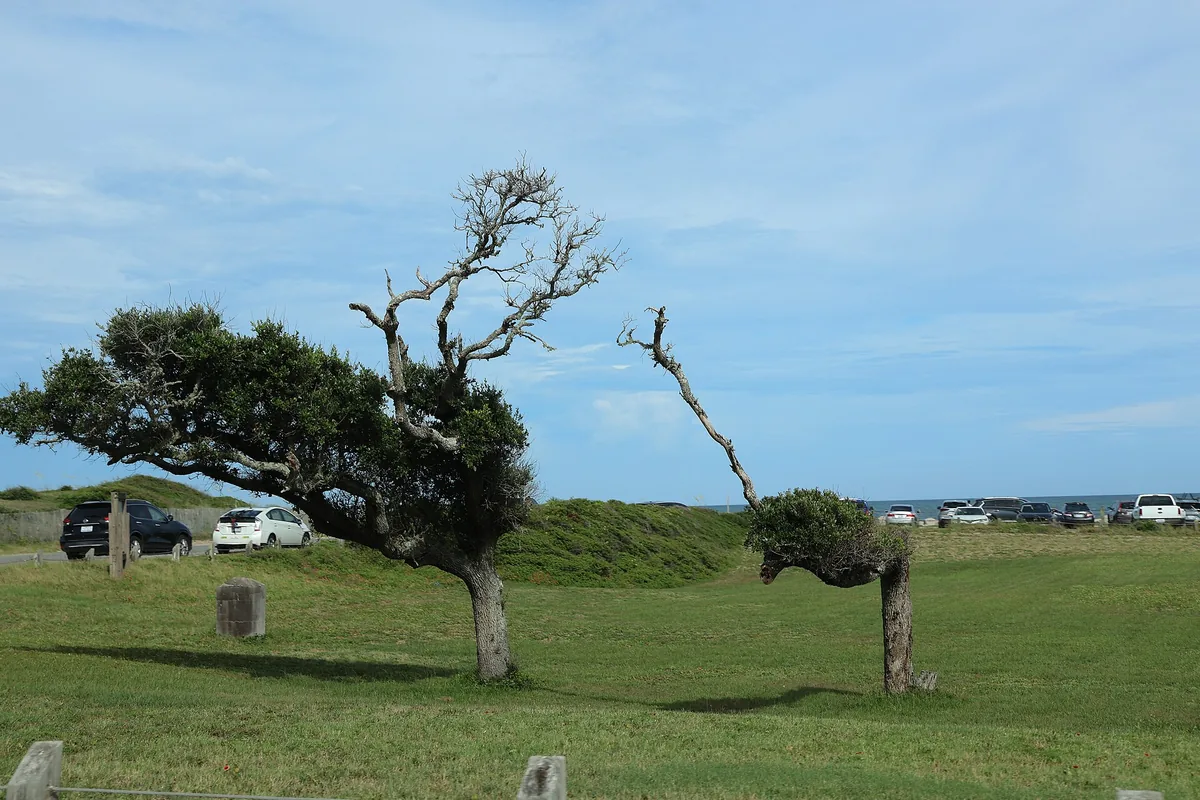 Photo credits
So, Is Fort Fisher Haunted?
If by haunted you mean scientifically proven to contain ghosts, Fort Fisher cannot make that claim. Its most famous apparitions and unexplained experiences remain unproven stories.
If by haunted you mean a place where history feels unusually close, the answer is much easier. Fort Fisher is a battlefield shaped by war, death, forced labor, loss and memory. The ghost stories grew there because the history was already powerful.
That is what makes Fort Fisher interesting. The earthworks are real. The battle is real. The powder explosion is real. The deaths of Whiting and Rose Greenhow are real. The hauntings belong to folklore, but the darkness underneath them belongs to history.
Related Reading
If you want to continue exploring the region's haunted side, our articles on Wilmington NC ghost stories and local legends, haunted attractions in Wilmington NC and the Maco Light near Wilmington offer more examples of how local folklore grows from real places and events.
Sources & further reading
Sources used to verify the historical and practical details in this guide:
- NC Historic Sites — Fort Fisher History: official history of the fort, its construction, defenses and the two major battles.
- NC Historic Sites — Aftermath of Fort Fisher: official context for the battle’s aftermath and human cost.
- NC Historic Sites — Plan Your Visit: current official visitor information for Fort Fisher State Historic Site.
- North Carolina Ghosts and Legends (JSTOR): published folklore context, including the Fort Fisher ghost tradition; used as folklore rather than evidence of paranormal activity.
Sources checked September 6, 2026. Historical records are treated separately from local folklore and reported paranormal experiences.