
Wilmington has plenty of old buildings, but the most interesting forgotten places are not always hiding behind boarded windows.
Some are ruins you can legally walk through. Others are former towns that disappeared from the map, military sites slowly reclaimed by the coast, or communities whose buildings are mostly gone even though their stories remain.
If you are looking for abandoned places near Wilmington, one rule matters from the start: abandoned does not mean open to the public.
This is not a guide to climbing fences or entering unsafe buildings. The places below are worth exploring because of their history, and several can be visited legally through public historic sites.
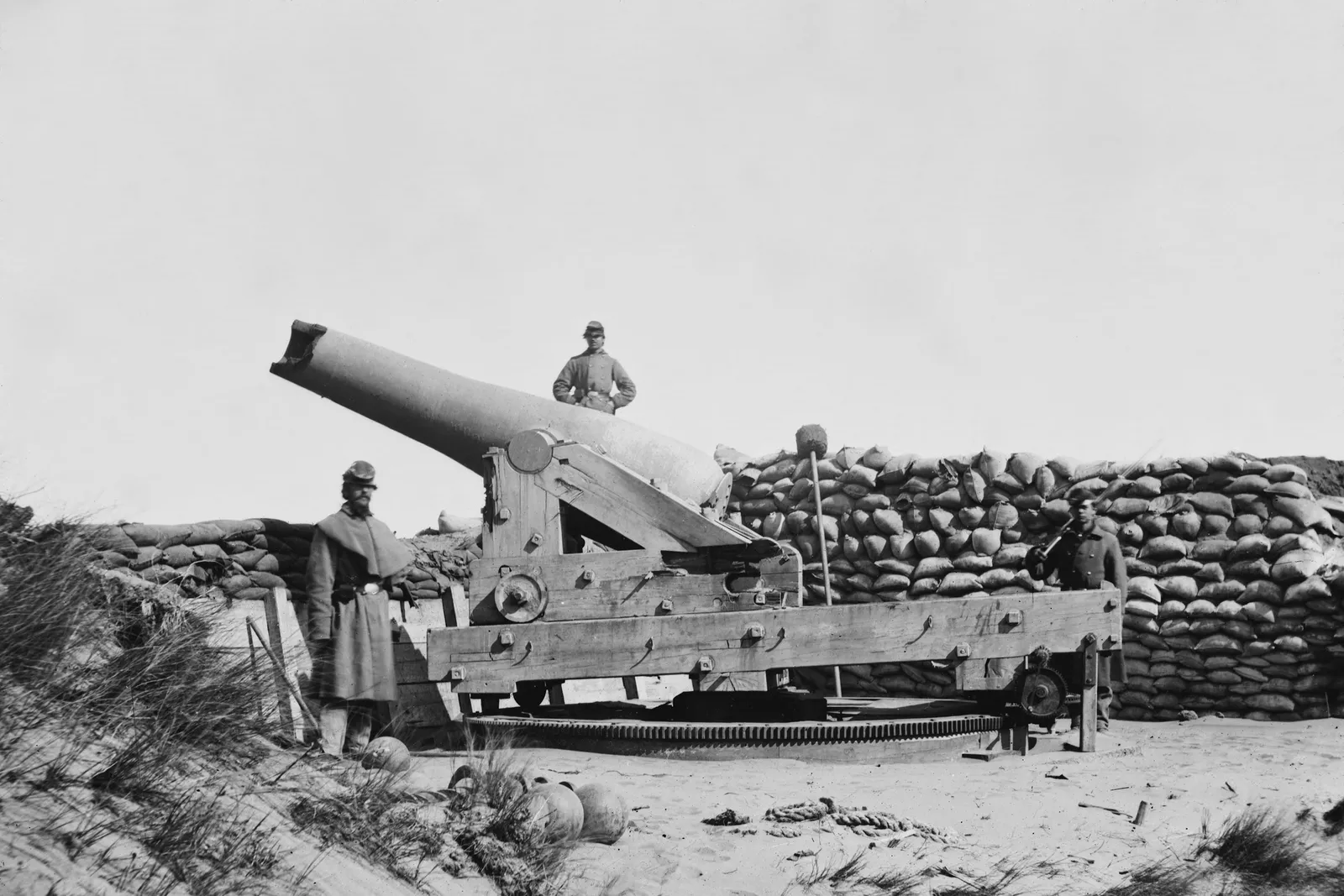
1. Brunswick Town: The Closest Thing to a Real Ghost Town
About halfway between Wilmington and Southport is one of the best places to start: Brunswick Town / Fort Anderson State Historic Site.
Brunswick was once an important colonial port on the Cape Fear River. British troops attacked and burned the town in 1776, and it was never rebuilt. Nearly a century later, Confederate forces built Fort Anderson across part of the abandoned settlement.
Today, visitors can walk past exposed foundations, traces of old streets and the roofless walls of St. Philips Church. Civil War earthworks rise behind them.
It feels abandoned because, in a very real sense, it is. The town disappeared, but its footprint remained.
What makes Brunswick Town especially interesting is that two different periods of history occupy the same ground. You are not simply looking at a ruined colonial settlement or a Civil War fort. You are seeing one built over the remains of the other.
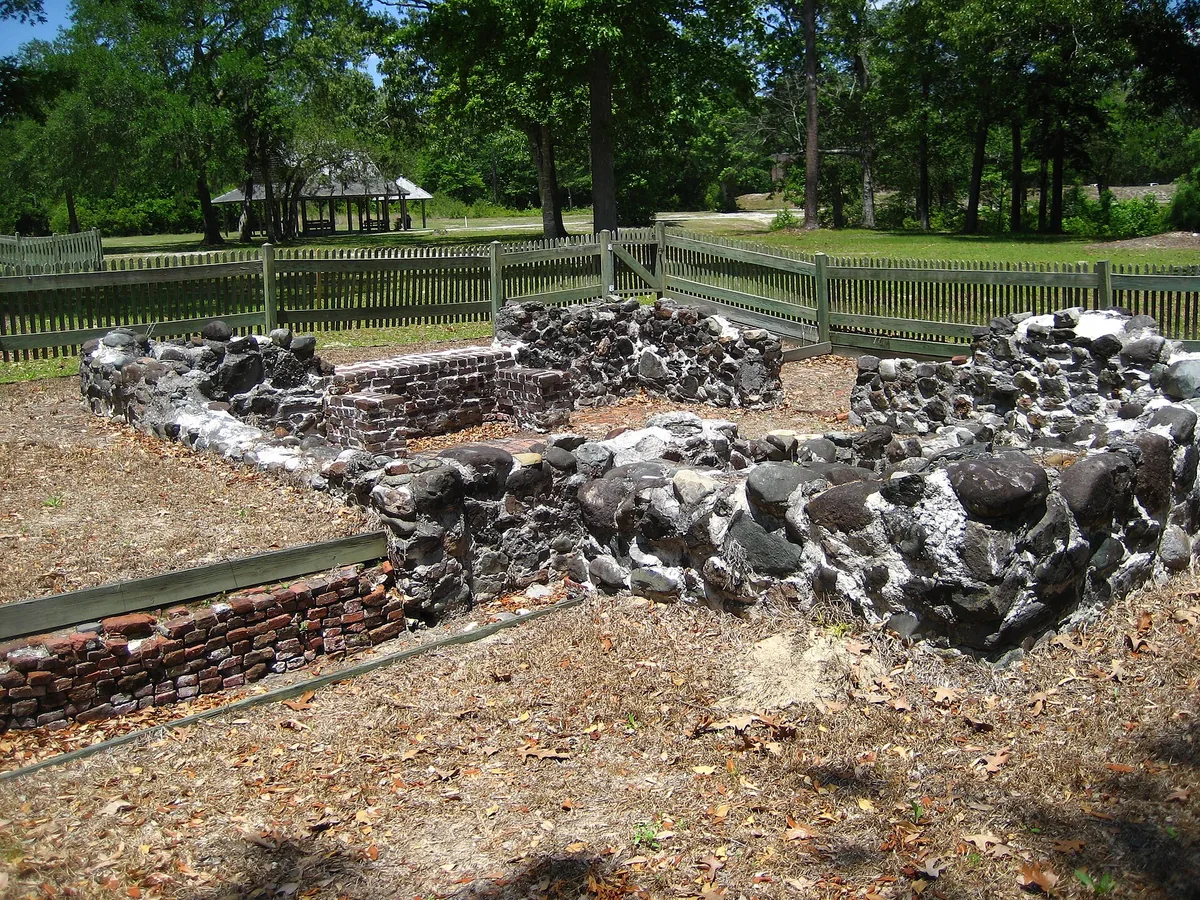 Photo credits
Can you visit?
Yes. It is a managed North Carolina State Historic Site with public grounds and a visitor center. Check current hours before driving out.
Best for: real ruins, photography and visitors who want a vanished settlement rather than an empty modern building.
2. Fort Fisher: A Fortress Mostly Lost to the Ocean
Fort Fisher does not look like the dramatic brick forts found in some coastal cities. That is partly because it was built mainly from sand and earth — and partly because much of it is gone.
During the Civil War, Fort Fisher protected the approaches to Wilmington and helped keep the port open to Confederate blockade runners. After the war, erosion, storms, road construction and later military activity changed the site dramatically.
Only a small portion of the original fortification survives today. Sections of the land face remain, while much of the sea-facing fort has been lost to erosion. That makes Fort Fisher a different kind of forgotten place.
You are not looking at something that was simply left empty. You are looking at a historic landscape where part of the original structure has physically disappeared.
Can you visit?
Yes. Fort Fisher is an official state historic site with a visitor center and outdoor areas open to the public.
Best for: Civil War history, coastal ruins and understanding how quickly the shoreline can erase a historic site.
3. Seabreeze and Freeman Beach: A Resort Community That Almost Disappeared
Not every forgotten place near Wilmington is ancient.
South of the city, Seabreeze and Freeman Beach once formed one of North Carolina's most important African American resort communities during segregation.
Beginning in the early twentieth century, Black families came here for hotels, restaurants, music, recreation and access to the coast at a time when many other beaches excluded them. Seabreeze grew into a major destination.
Then the landscape changed. Hurricane Hazel caused devastating damage in 1954, and changes along the shoreline contributed to erosion. Some businesses reopened, but the resort never fully returned to what it had been. By the 1970s, most of the businesses associated with the old resort had closed.
This is not a traditional abandoned site where you walk through intact ruins. Much of what made Seabreeze famous is simply gone. That is exactly why its history matters.
Best for: visitors interested in African American history and places where the story is more important than the remaining buildings.
4. The Abandoned Ships Around Eagles Island
Across the Cape Fear River from downtown Wilmington sits Eagles Island, a landscape most visitors see without realizing how much history is hidden along its shoreline.
Archaeological surveys have documented numerous wrecked or abandoned vessels around Wilmington Harbor, with many concentrated along Eagles Island. They represent different kinds of working river craft used during the nineteenth and early twentieth centuries.
That makes the area something like a quiet maritime graveyard.
These are not intact ships waiting to be explored. Many remains are partly submerged, deteriorated or located in marshy environments. Their value is historical: before highways and modern freight systems, the Cape Fear River was a working transportation corridor, and boats moved people, timber and goods through the region.
Can you explore the wrecks?
Treat them as archaeological resources, not abandoned playgrounds. Do not climb onto wrecks, disturb artifacts or cross private or environmentally sensitive areas to reach them.
Best for: maritime history and visitors curious about Wilmington's less visible industrial past.
5. The Old Bulluck Hospital: Forgotten, But Not Abandoned
The former Bulluck Hospital is a useful reminder that old and abandoned are not the same thing.
The historic hospital building still stands in downtown Wilmington. It served as a private medical facility in the early twentieth century and later found other uses.
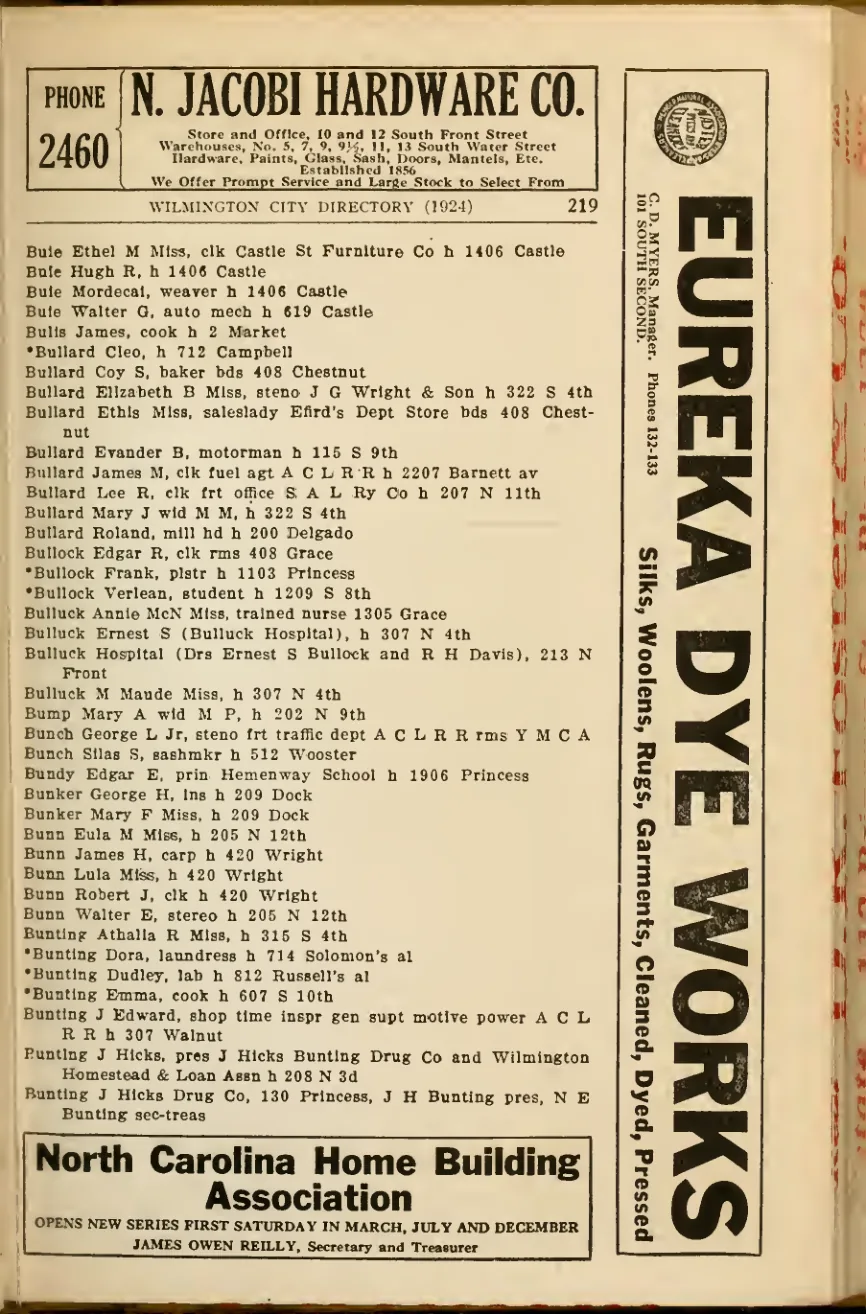 Photo credits
Today, it is not an abandoned building open for exploration. That distinction matters because older online stories sometimes make Wilmington properties sound like empty ruins when they are actually occupied, reused or privately controlled.
The building has also gathered ghost stories over the years, but those belong to local folklore and reported experience. They do not make the property abandoned or open for paranormal exploration.
Best for: local history and ghost-lore readers. View the property respectfully from public areas.
Are There Really Abandoned Buildings in Wilmington?
Yes, but that does not automatically make them good visitor attractions.
Buildings change ownership. Some wait for redevelopment. Others are unsafe, privately owned or temporarily vacant rather than historically abandoned.
For that reason, searching for a random boarded-up house is usually less interesting — and much riskier — than visiting a preserved ruin such as Brunswick Town.
The Cape Fear region also has an active preservation community. A structure that looks forgotten today may later be restored and reused rather than demolished.
The most worthwhile forgotten places around Wilmington are often the places where something has already disappeared: a town burned and never returned, a fort lost much of its footprint to the Atlantic, a famous beach community faded, or old working vessels settled into the edge of the Cape Fear River.
How to Explore Forgotten Places Safely
Stay on public property. A building looking empty does not mean it has no owner.
Do not enter ruins unless the site specifically allows it. Old floors, roofs and foundations can fail without warning.
Leave artifacts where they are. Archaeological objects lose much of their value when removed from their original location.
Respect cemeteries and historic communities. These are real places connected to real families, not movie sets.
When possible, choose managed historic sites. Brunswick Town and Fort Fisher allow you to explore substantial historic remains without trespassing or guessing whether you are allowed to be there.
Which Forgotten Place Should You Visit First?
For actual ruins, Brunswick Town / Fort Anderson is the strongest choice.
For military history and a landscape partly erased by nature, visit Fort Fisher.
For a story that deserves to be better known, read about Seabreeze and Freeman Beach before driving through that area.
And the next time you look across the Cape Fear River toward Eagles Island, remember that Wilmington's forgotten history does not stop at the shoreline. Some of it is still sitting beneath the water.
Related Wilmington History
If forgotten places are what brought you here, you may also enjoy our guides to why Wilmington has a haunted reputation, Gallows Hill and Wilmington ghost stories and local legends.